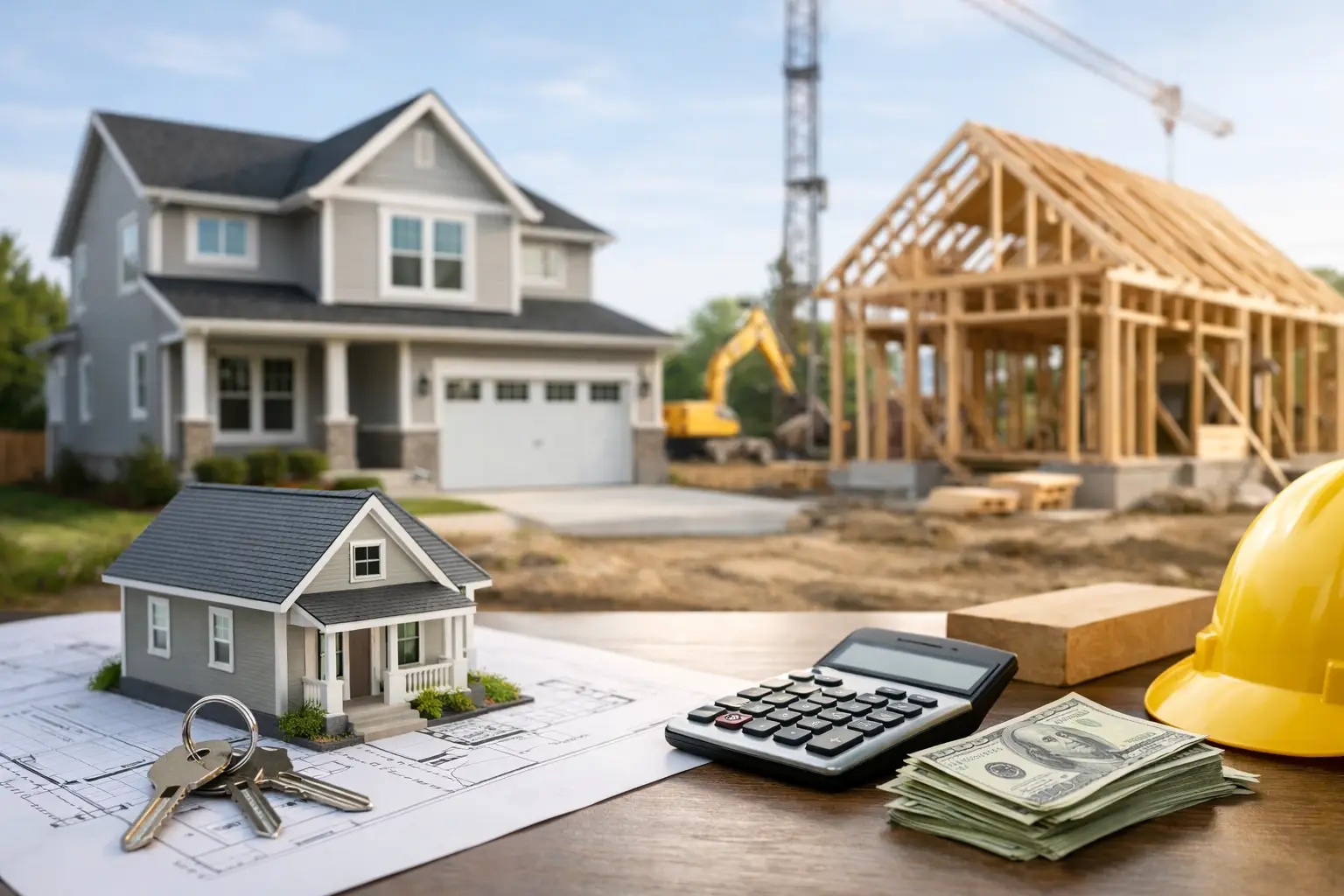
You find the lot, finalize the plans, and then hit the financing wall. That is where many borrowers start asking, what is FHA one time close construction loan, and could it make building a home easier than juggling separate land, construction, and mortgage financing.
The short answer is this: an FHA one-time close construction loan is a government-backed loan program that lets you finance the land purchase if needed, the construction of the home, and the permanent mortgage with a single closing. Instead of closing once for the construction phase and then again when the home is complete, you close one time up front. For the right borrower, that can reduce complexity, lower upfront transaction costs, and create a more predictable path from raw land or teardown to finished home.
That said, this is not a universal fit. FHA construction financing has real advantages, but it also comes with property standards, builder requirements, loan limits, and documentation rules that can rule out certain projects.
What is FHA one time close construction loan financing?
At its core, this loan combines two stages of financing into one structure. During construction, funds are disbursed in draws to pay for approved work. Once the home is complete and the lender confirms the project meets requirements, the loan converts to a permanent FHA mortgage without a second closing.
That is the key distinction. A traditional construction setup often involves a short-term construction loan first, followed by a separate refinance or permanent mortgage later. With a one-time close FHA structure, you handle that transition in a single loan package from the beginning.
Because the loan is insured by the Federal Housing Administration, lenders may be able to offer more flexible qualification than some conventional construction programs. This can matter for borrowers with moderate down payments, limited cash reserves, or credit profiles that do not fit stricter bank overlays.
How the FHA one-time close process works
The process starts before the first shovel hits the ground. The lender reviews the borrower, the builder, the plans, the specifications, the budget, and the value of the completed home. The appraisal is generally based on the projected finished value, not just the current value of the land.
After approval, the loan closes once. If the borrower does not already own the lot, the land purchase can often be included. Construction funds are then held and released through a draw schedule as the project moves forward. The lender will usually require inspections during construction before each draw is released.
When the home is finished, the loan rolls into the permanent mortgage phase. There is no need to re-qualify for a new loan in the usual sense and no second escrow closing for the conversion. That feature is a major reason borrowers look at this program in the first place.
Why borrowers consider this loan
The main appeal is simplicity. One application, one underwriting process, and one closing can be much easier to manage than stitching together separate financing pieces. It can also reduce some duplicative closing costs that come with a two-close structure.
For owner-occupied borrowers, FHA also opens the door to lower down payment options than many construction lenders require. Conventional construction loans often ask for more equity, especially on custom homes or ground-up projects. FHA can be more accessible if you have solid income and manageable debt but do not want to tie up a large amount of cash.
There is also a payment-planning benefit. With one loan structure in place from the start, borrowers have more clarity about where the project is headed after construction ends. That can be helpful when you are budgeting for long-term homeownership, not just the build phase.
Who this loan is best for
This program generally makes the most sense for borrowers building a primary residence who want a lower-down-payment path and who are working with an approved, licensed builder. It can be attractive for first-time custom home clients, buyers purchasing land and building in one transaction, and homeowners replacing an existing property with a new one.
It may also fit borrowers who qualify under FHA guidelines more comfortably than they do under conventional standards. If your credit is decent but not ideal, or your debt-to-income profile is acceptable for FHA but tight for another program, this can be worth a serious look.
Where it gets more limited is with highly complex builds, unusual rural properties, luxury-level budgets above program limits, or owner-builder situations. In those cases, a specialized non-FHA construction program may offer more flexibility.
FHA one-time close requirements to know
The borrower must meet FHA credit, income, occupancy, and debt-to-income requirements. The home must usually be a primary residence, not a second home or pure investment property. The property itself must also meet FHA standards for safety, habitability, and appraisal support.
Builder approval is one of the most important moving parts. FHA lenders typically require a licensed general contractor with appropriate experience, insurance, and documentation. If you plan to act as your own builder, that can be a problem under many FHA construction setups.
You also need a fully documented project. That usually means plans, specs, cost breakdown, builder contract, timeline, permits or permit readiness, and supporting property information. Construction loans are not underwritten from a rough idea. The file needs to show that the project is real, priced, and ready to move.
Costs, down payment, and mortgage insurance
One reason borrowers ask about this program is the lower down payment. FHA allows a down payment as low as 3.5 percent for qualified borrowers, although the exact required investment can depend on the transaction structure and lender guidelines. If you already own the lot, the land equity may count toward part or all of that requirement.
But low down payment does not mean low total cost. FHA loans include upfront mortgage insurance and monthly mortgage insurance in most cases. Those costs need to be weighed against the savings from a smaller initial cash investment.
There are also normal construction-related expenses to consider, including reserves, contingency expectations, inspections, permit costs, and interest accrual during the build. A one-time close can reduce duplicate closing expenses, but it does not eliminate the broader costs of building a home.
The trade-offs borrowers should understand
This is where many online explanations fall short. An FHA one-time close loan can be a strong tool, but it asks the borrower and builder to stay inside a fairly defined box.
If your project is straightforward, your builder is experienced, and your budget fits within FHA parameters, that structure can work well. If your project is unconventional, your plans are still fluid, or you need exceptions on property type, square footage, or borrower profile, the program can feel restrictive.
Timing also matters. Construction lending requires coordination between borrower, builder, appraiser, title, escrow, and lender. FHA adds another layer of compliance. If your team is not organized, delays can happen before closing and during draws.
How this compares with other construction loan options
Compared with a conventional one-time close loan, FHA may offer easier entry for borrowers who need a lower down payment or more forgiving credit standards. The trade-off is mortgage insurance and stricter program boundaries.
Compared with a two-time close structure, FHA one-time close financing is usually cleaner and can reduce repeat closing costs. But some two-close loans offer more freedom in project type, loan size, or post-construction mortgage strategy.
Compared with portfolio or private construction lending, FHA is often more standardized and more cost-effective for the right owner-occupied borrower. Private or niche construction loans may solve tougher scenarios, but they can bring higher rates, larger down payments, or shorter timelines.
This is why loan matching matters. The best construction loan is not the one with the broadest marketing appeal. It is the one that fits the actual project, borrower strength, and exit plan.
Common mistakes borrowers make
The first mistake is assuming FHA construction financing is automatic just because they qualify for a normal FHA mortgage. Construction underwriting is more detailed. The builder, plans, budget, and property all matter.
The second is underestimating documentation. Missing contracts, incomplete plans, or vague cost breakdowns can stall a file quickly. Borrowers who prepare thoroughly usually move faster and get clearer answers.
The third is choosing the wrong loan structure too early. Some borrowers focus only on down payment and miss bigger issues like builder approval, project eligibility, draw administration, and appraisal support on finished value.
For California borrowers especially, where land values, permit timelines, and project costs can vary sharply by county, specialist guidance makes a difference. California Construction Loans works with borrowers who need help evaluating whether an FHA one-time close loan is the right fit or whether another construction program will serve the project better.
Is an FHA one-time close loan a good idea?
If you are building a primary residence, want one closing instead of two, and need a lower-down-payment path, the answer may be yes. If your project is highly customized, your builder setup is unconventional, or your financing needs go beyond FHA limits, probably not.
The right next step is not guessing. It is reviewing the land, plans, budget, builder, and borrower profile together before you commit to a financing path. A good construction loan should support the build you are actually doing, not force your project into the wrong box.
When the structure fits, this loan can be a practical way to move from blueprint to permanent financing with fewer moving parts and better clarity from day one.
