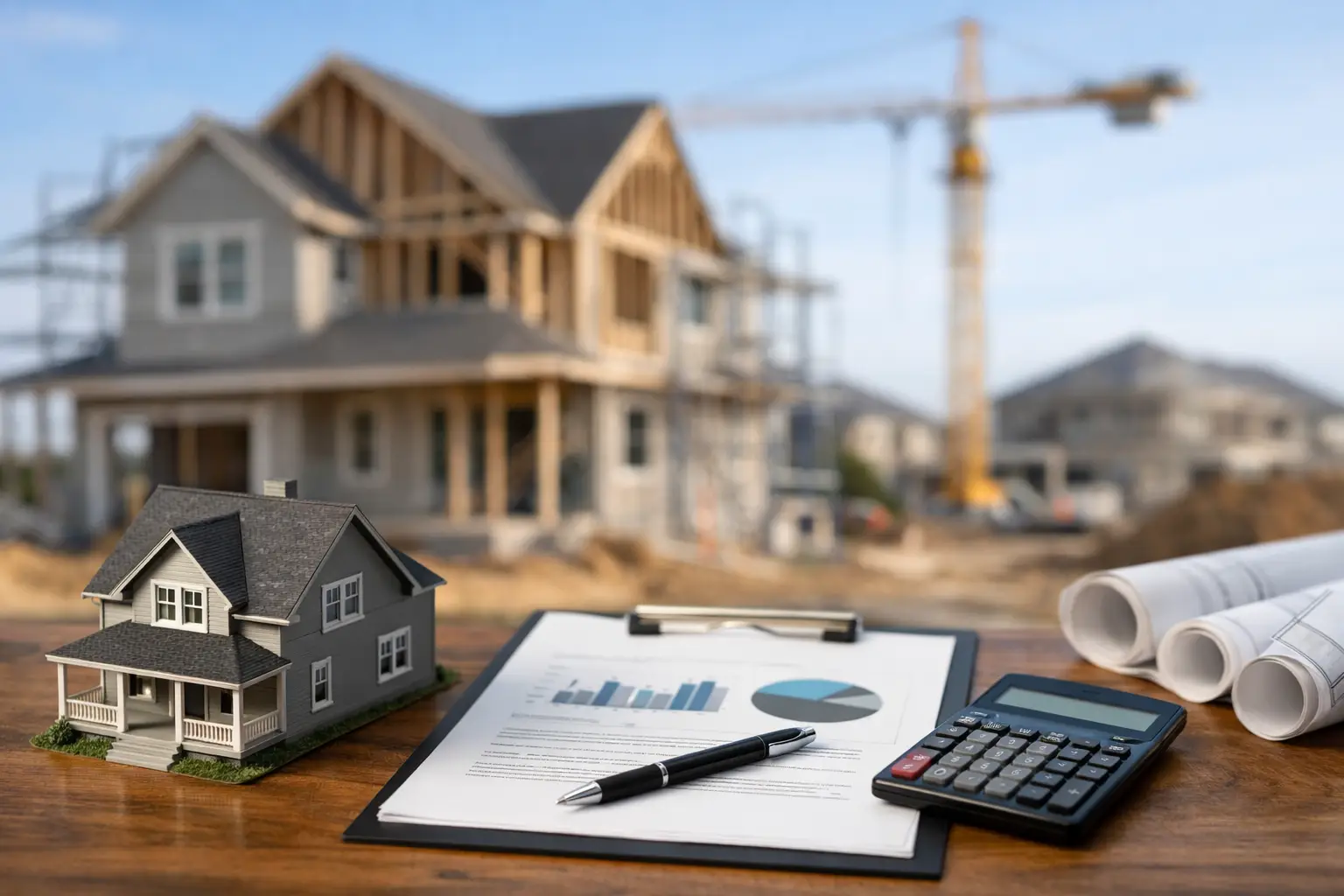
If you're short on cash but sitting on a strong build plan, using appraised value for construction loan approval may be the difference between moving forward and stalling out. In construction lending, the number that matters most is often not what the property is worth today, but what it is expected to be worth when the project is complete. That distinction is where many borrowers either gain leverage or lose financing options.
A standard mortgage usually looks at current value. A construction loan often looks at future value, commonly called as-completed value or finished appraised value. For California homeowners building a custom residence, tearing down and rebuilding, or planning a major remodel, that future-value approach can create more borrowing power than a bank focused only on present-day equity.
What using appraised value for construction loan approval really means
When a lender evaluates a construction project, the appraisal is not limited to the land or the home in its current condition. Instead, the appraiser reviews the plans, specs, budget, site details, and comparable properties to estimate what the completed home should be worth. That projected figure becomes a key part of the loan structure.
This matters because construction lenders generally size the loan around loan-to-value or loan-to-cost guidelines. Loan-to-cost looks at the total project budget. Loan-to-value looks at the completed appraised value. Depending on the lender and the program, one may drive the decision more than the other.
For example, if your lot is owned free and clear and your completed home is expected to appraise well above total cost, the equity position can be stronger than it appears on paper at first glance. On the other hand, if build costs are rising faster than neighborhood values, the appraisal can become the limiting factor, even when income and credit are solid.
Why finished value matters more than current value
This is where many general banks fall short. They may be comfortable lending against what exists today, but construction financing requires a more specialized review. A vacant lot, an outdated house before a major remodel, or a partially improved parcel may not show much current value relative to the total dollars needed. The finished project tells a very different story.
If a borrower already owns land, the land equity can often count toward the overall transaction. Then the as-completed appraisal shows the lender what the final collateral should support. That can reduce the required cash contribution and improve financing flexibility.
A simple example helps. Suppose you own a lot worth $500,000 and plan to build a home with a total construction cost of $900,000. If the completed property appraises at $1.8 million, a lender may be willing to lend based on that finished value rather than forcing you to qualify off the current dirt value alone. That does not mean every lender will lend the same amount, but it shows why construction-loan structure is not just about cost - it is about value at completion.
The appraisal is built from plans, specs, and market support
A construction appraisal is only as strong as the file behind it. Appraisers typically need a full set of plans, a detailed construction budget, materials information, and a realistic scope of work. If your plans are incomplete or your budget is vague, the valuation can come in lower than it should.
That is a frequent problem for borrowers who approach the process too early. They want a firm approval before they have finalized plans, selected finishes, or documented costs. Lenders can often give preliminary guidance early, but the appraisal stage gets stronger when the project is well defined.
The quality of the comparable sales also matters. In higher-cost California markets, unusual custom homes, rural properties, and luxury builds can be harder to appraise because there may be fewer similar recent sales. In those cases, structuring the loan with the right lender becomes even more important. Some programs are simply better equipped for complex residential construction than others.
How appraised value affects your down payment and equity
Borrowers often ask one practical question first: how much cash do I need? The answer usually depends on a combination of credit, occupancy, reserves, property type, and whether the project qualifies for higher leverage based on finished value.
If you already own the lot, that equity may cover part or all of the required down payment. If you are buying the lot and building at the same time, the lender may evaluate the combined land and construction transaction together. If you are doing a major remodel, the current property value plus planned improvements may support the structure.
This is why using appraised value for construction loan planning should happen early, before you assume you need a large cash injection. The appraisal may support more leverage than you expect. It may also reveal a gap you need to solve before breaking ground.
A strong finished-value appraisal can help in several ways. It can support a higher loan amount, reduce the amount of cash needed from the borrower, and make a one-time close construction-to-permanent loan more workable. But there are limits. Lenders still look at debt-to-income ratio, liquidity, credit profile, builder qualifications, and project feasibility.
When the appraisal becomes the problem
Not every project benefits equally from an as-completed valuation. If your construction budget is aggressive for the neighborhood, the appraisal may not fully support the cost. This happens when borrowers overbuild for the area, choose highly personal design features with limited resale support, or build in a market with few comparable sales.
There is also a timing issue. Appraisals reflect the market at the time of underwriting, not the market you hope exists a year from now. If values are softening or the market is uncertain, lenders may be more conservative. That can affect leverage even if your long-term outlook is positive.
Major remodels can be especially nuanced. Some additions and upgrades create strong measurable value. Others improve livability more than appraised resale value. A borrower may spend heavily on custom finishes, structural redesign, or specialty features that do not fully translate into appraisal support. The project may still make personal sense, but the loan structure has to respect what the market will recognize.
Working with the right lender matters
Construction financing is not a commodity product. The same project can be viewed very differently depending on the lender's guidelines, appetite for owner-occupied construction, tolerance for owner-builder scenarios, and willingness to lend on finished value. That is why many borrowers get a no from a bank and assume the deal cannot be done, when the real issue is that they asked the wrong lender.
A specialist can help present the project correctly, identify the strongest valuation path, and match the file with lenders that understand residential construction. That includes one-time close loans, construction-only loans, major remodel financing, and land-plus-construction structures. In California, where property values, entitlement issues, and custom building costs vary widely by market, that guidance is not a luxury. It can materially change the outcome.
At California Construction Loans, we regularly help borrowers structure loans around finished appraised value when the project and borrower profile support it. That means looking beyond the obvious numbers and focusing on how the deal will actually be underwritten.
What borrowers should do before applying
Before you apply, get your plans, specs, budget, and builder information into credible shape. If you own the land, confirm how title is held and whether there are liens. If you are still acquiring the lot, think through whether a combined close makes more sense than separate financing. And if you are acting as an owner-builder, expect more scrutiny, not less.
Most important, do not assume your current home equity or land value tells the whole story. In construction lending, the completed appraised value often drives the real opportunity. Used correctly, it can expand leverage, lower cash-to-close requirements, and make a project financeable that would not fit inside a conventional mortgage box.
The smartest next step is not guessing what your project might qualify for. It is having the numbers reviewed by a construction-loan specialist who can tell you where the appraisal helps, where it falls short, and how to structure around both.
