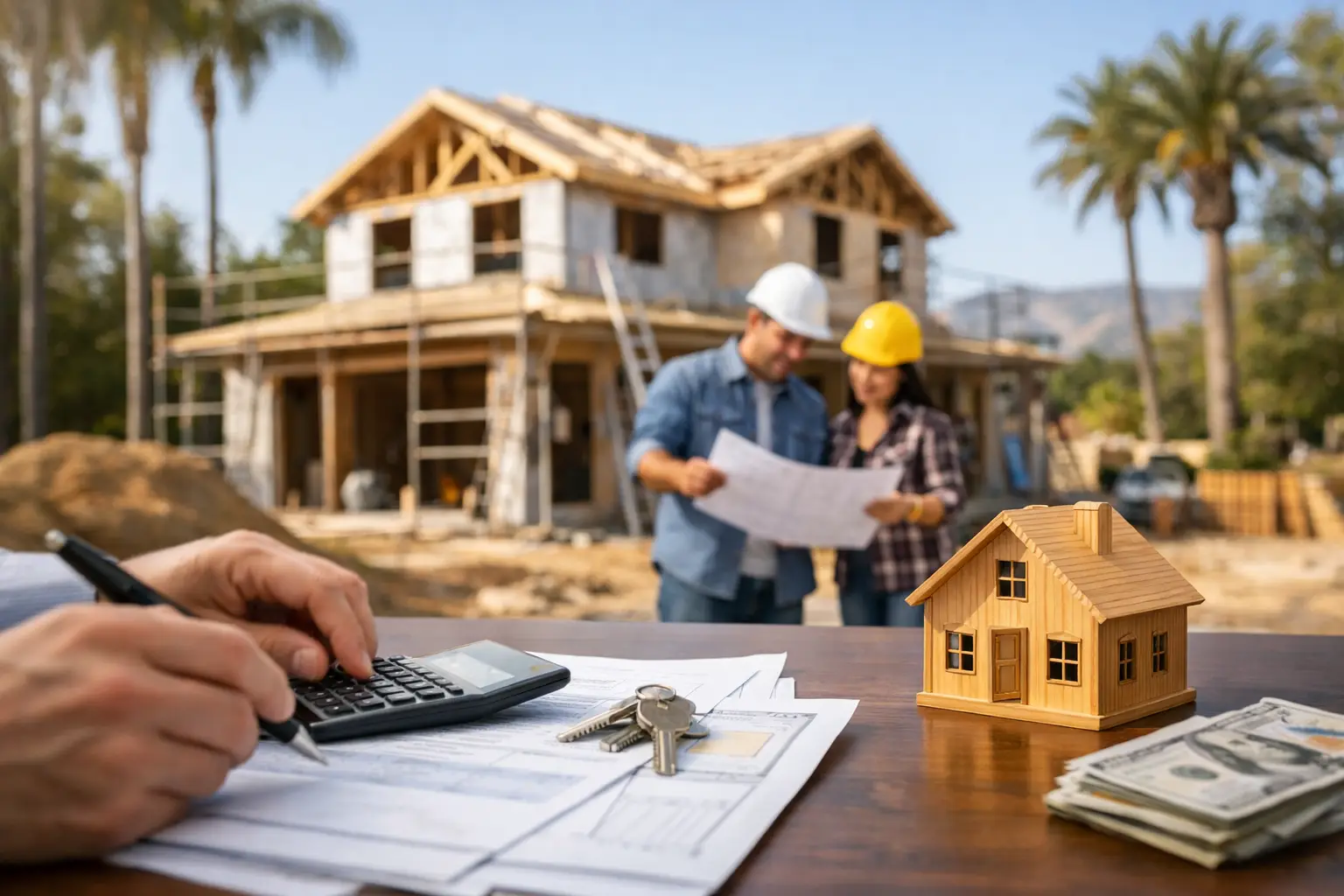
Most owner-builders do not run into trouble because the project is unrealistic. They run into trouble because the financing is. A strong owner builder financing guide starts with that reality: building your own home in California is possible, but the loan structure, documentation, and lender expectations have to be right from the beginning.
If you plan to act as your own general contractor, you are asking a lender to underwrite more than a property. They are also evaluating your project management ability, the credibility of your budget, the quality of your plans, and whether the finished home will support the loan amount. That is why owner-builder financing is more specialized than a standard mortgage and why many traditional banks decline these files even when the borrower has strong income and assets.
What owner-builder financing really means
Owner-builder financing is designed for borrowers who want to oversee construction of their primary residence rather than hire a licensed general contractor to manage the entire build. In California, that can be attractive for borrowers who already have construction experience, access to subcontractors, or a clear vision for a custom home and want more control over costs and decisions.
The trade-off is simple. More control can mean more savings and flexibility, but it also means more lender scrutiny. Many lenders view owner-builder projects as higher risk because cost overruns, timeline delays, and management issues are more common when there is no third-party general contractor in charge.
That does not mean financing is unavailable. It means the loan has to be placed with lenders that understand this niche and are comfortable with a properly documented owner-builder file.
Owner builder financing guide: what lenders look at first
Before a lender focuses on rates or loan terms, they usually want to know whether the project is financeable at all. That starts with the basics: the land, the plans, the budget, and the borrower.
If you already own the lot, that can help. In many cases, land equity becomes part of your overall contribution to the project. If you are buying land and building at the same time, the transaction may need to be structured as a land-plus-construction loan, which requires careful coordination. Either way, lenders will want to see a build that is realistic for the site, zoning, neighborhood, and finished value.
They will also look hard at your liquidity. Even when higher leverage is available, owner-builders typically need cash reserves beyond the minimum down payment. That is because custom construction rarely follows the original budget perfectly. A borrower with no financial cushion is a bigger credit risk, even if income looks strong on paper.
Experience matters too, but not always in the way borrowers assume. Some lenders want formal construction or project management experience. Others are more flexible if the borrower has a strong professional team, detailed plans, a well-supported budget, and a credible path to completion. The file is often won or lost on presentation.
Loan options for owner-builders in California
The best loan structure depends on where you are in the process and how you want the project to end.
A one-time close construction-to-permanent loan is often the cleanest option for an owner-occupied build. It combines the construction phase and the permanent mortgage into a single closing. That can reduce closing costs, streamline paperwork, and eliminate the need to re-qualify later under a new loan. For borrowers who want certainty and efficiency, this is usually the first structure to evaluate.
A construction-only loan can make sense when the borrower expects to refinance after completion, sell another property, or shift financing strategies later. It offers flexibility, but there is more refinance risk at the end. If rates, income, or market conditions change before the home is complete, the exit strategy can become more expensive.
Some borrowers also need a land loan first, especially if they are not ready to start construction immediately. That can work, but it usually means more than one financing event. If the goal is to preserve cash and simplify the process, a combined structure may be better when timing allows.
The right answer depends on your lot status, project readiness, down payment, reserve position, and long-term plan for the property.
How finished-value underwriting changes the numbers
One of the biggest issues in construction lending is valuation. Owner-builders often focus on what the project will cost, but lenders also care what the completed home will appraise for.
Finished-value-based underwriting can be especially important in California, where land value, design quality, and neighborhood demand may support a stronger completed appraisal than the current as-is value suggests. When a lender underwrites against projected completed value rather than just current land value and cash invested, the borrower may qualify for better leverage.
This is where specialized construction lenders stand apart from general banks. A bank that only thinks in terms of simple acquisition lending may not see the full strength of a well-designed custom build. A construction lender with the right program may.
Still, higher leverage is not automatic. The appraisal has to support it, and the plans, specs, and budget have to align with the market. Overbuilding for the area or pushing a budget that does not match local resale trends can create problems, even if the home itself is impressive.
Documentation that can make or break approval
An owner-builder loan package needs to be complete. Incomplete files create doubt, and doubt slows or kills approvals.
At a minimum, most lenders will expect full plans and specifications, a line-item cost breakdown, builder or subcontractor information, a realistic construction timeline, and borrower financials. Depending on the program, they may also want permits, a soils report, engineering, insurance details, and evidence that the borrower has the experience or support needed to manage the job.
Budget quality matters more than many borrowers realize. If the line items are thin, inconsistent, or obviously understated, the lender will assume the project is undercapitalized. That can lead to lower leverage, larger reserve requirements, or an outright decline.
The same goes for timeline assumptions. A custom home in California is rarely a quick project. If the schedule ignores permitting delays, utility work, weather, site conditions, or long-lead materials, it will not read as credible to underwriting.
Common reasons owner-builder loans get declined
The most common problem is not bad credit. It is weak project presentation.
Borrowers often come in with a rough budget, incomplete plans, or the belief that strong income alone should carry the file. In standard mortgage lending, that might be enough to start. In construction lending, it is not. The project itself has to underwrite.
Another issue is lack of reserves. Even if the down payment requirement is met, lenders want to see that you can absorb change orders, delays, and unexpected costs without jeopardizing completion.
Sometimes the property is the problem. Rural access, difficult topography, coastal restrictions, fire-zone concerns, septic issues, or unusual design choices can all narrow the lender pool. That does not make the project impossible, but it does make lender selection more important.
And sometimes borrowers are simply using the wrong lending channel. A general retail bank may not offer an owner-builder program at all, or it may have rigid overlays that eliminate otherwise qualified files.
How to improve your approval odds
The strongest owner-builder borrowers prepare the loan package before they apply, not after. That means treating financing like part of the build, not a separate step.
Start with a complete plan set and a professional budget. Make sure your subcontractor bids, material assumptions, and timeline are grounded in current California conditions, not outdated estimates. Be ready to explain your experience honestly. If you are not a career builder, show the strength of the team around you and how the project will be managed.
It also helps to think through the draw process in advance. Construction funds are not handed over in one lump sum. They are disbursed in stages as work is completed. If you do not understand how draws, inspections, and contingency management work, the project can stall even after closing.
Most important, work with a specialist who understands residential construction financing rather than trying to force the project through a standard mortgage lane. California Construction Loans works with borrowers who need realistic owner-builder solutions, and that expertise matters when the file is complex.
A practical owner builder financing guide for next steps
If you are serious about building as an owner-builder, the next move is not shopping blindly for the lowest rate. It is getting clarity on loan structure, leverage, and documentation before you commit to a budget or break ground.
A well-structured owner-builder loan can preserve cash, reduce financing friction, and give you a clearer path from land to completed home. A poorly structured loan can leave you underfunded halfway through the job. The difference usually comes down to preparation, lender fit, and whether the financing strategy matches the real demands of the project.
If your plans are solid, your budget is credible, and your financing is built around the finished home rather than guesswork, owner-building in California becomes a lending problem that can be solved - not a dream that stays on paper.
