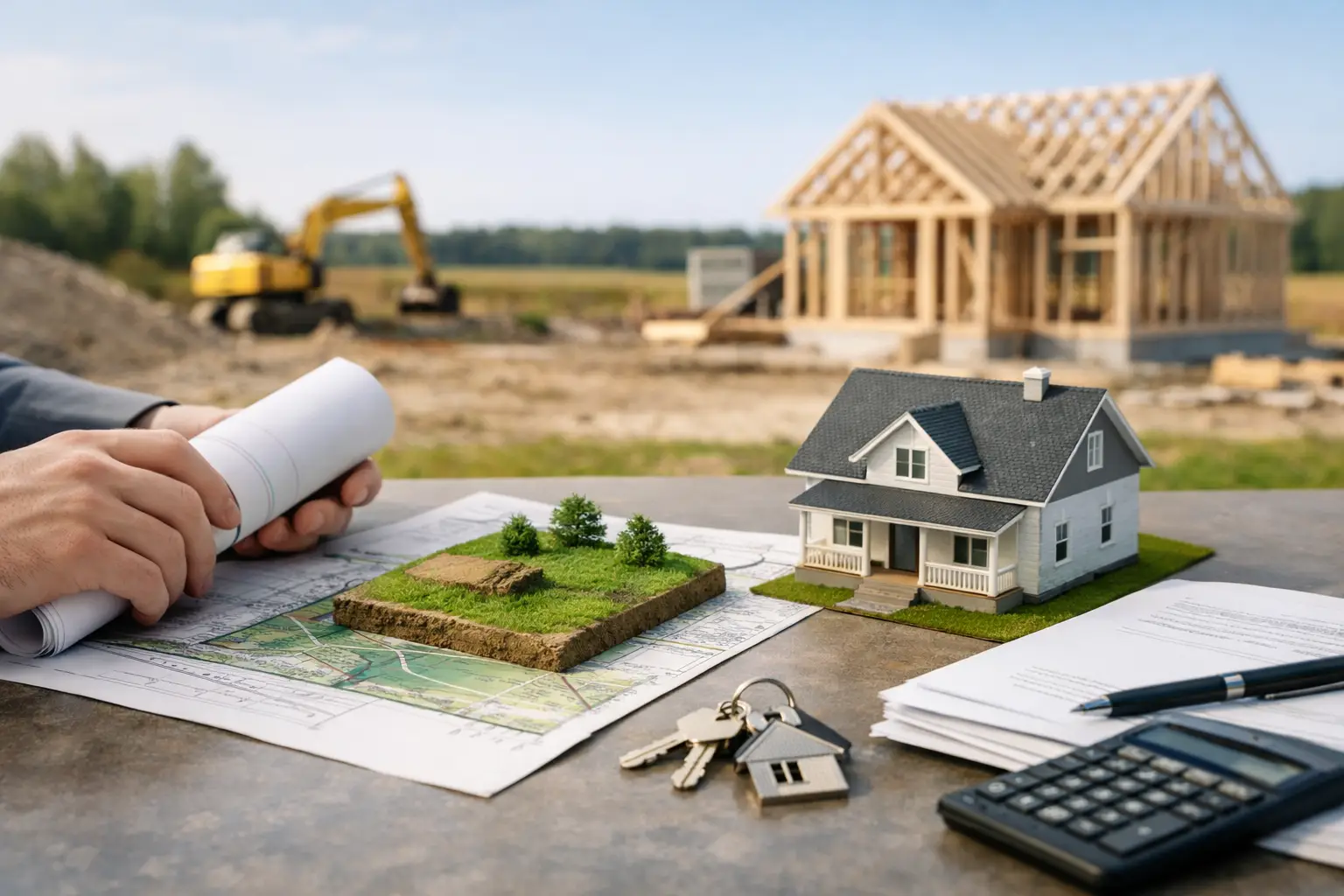
You find the right lot, sketch the house you actually want, and then the financing hits a wall. That is where a good land purchase and build loan guide matters. Buying dirt is not the same as buying a finished home, and construction financing is not just a bigger mortgage. In California, the details around appraisal method, down payment, permits, plans, and lender structure can decide whether your project moves forward or stalls.
What a land purchase and build loan guide should actually explain
Most borrowers start with the same question: can I finance the land and construction together? Sometimes yes, sometimes no. The answer depends on the stage of your project, your documentation, your equity position, and whether the lender offers a one-time close or separate transactions.
A true land purchase and build loan guide should not stop at definitions. It should explain how lenders look at risk. Raw land carries more uncertainty than an existing house. New construction adds another layer because the home does not exist yet. That is why lenders pay close attention to the lot value, completed plans, budget, builder profile, and the projected appraised value after the home is built.
For many California borrowers, the best structure is one that accounts for the finished value of the property, not just the current dirt value. That can create more leverage and a more workable path to approval, especially when a standard bank is too conservative for a custom build.
The two main ways to finance land and construction
The cleanest option is often a one-time close construction-to-permanent loan. With this structure, the land purchase and build costs are rolled into one loan that closes once. During construction, funds are disbursed in stages. After the home is complete, the loan converts into permanent financing.
This approach reduces duplicate closing costs and limits the risk of having to requalify later. It is especially attractive when rates, income, or market conditions may change before construction ends. For owner-occupied projects, it can also simplify planning because you know the long-term loan structure up front.
The second option is a two-step approach. You buy the land first, either with cash or a land loan, and then secure a separate construction loan later. This can make sense if you are still working through design, engineering, or county approval. It gives you time, but it also adds complexity. You may face a second closing, another underwriting review, and different appraisal conditions when you move into the build phase.
Neither approach is always better. If your plans are ready and your builder is lined up, one-time close financing is often more efficient. If your lot is ideal but your construction package is months away, a separate land loan may be the more realistic first step.
How lenders qualify a land-plus-construction project
This is where many borrowers get surprised. A lender is not just approving you. The lender is also reviewing the project itself.
You will usually need income and asset documentation, credit review, and reserves, just as you would for a mortgage. But construction lending adds more. Lenders commonly want a detailed set of plans, specifications, a signed builder contract, a line-item cost breakdown, and a realistic timeline. If you are an owner-builder, the review may be stricter because the lender is taking on additional completion risk.
The lot matters too. Utility access, slope, zoning, easements, and location can affect both eligibility and appraisal. A beautiful parcel is not automatically an easy loan. If the site needs substantial grading, retaining walls, septic work, or long utility runs, your budget has to reflect that. Underestimating site work is one of the fastest ways to create trouble during underwriting.
In California, county and city permit timelines also matter. A lender may approve a project before final permits in some cases, but the more complete your file, the easier it is to structure the loan with confidence.
Down payment and equity: what moves the numbers
The biggest practical question is usually how much cash you need. The answer depends on the loan program, occupancy, credit profile, and whether you already own the land.
If you are purchasing the lot and building at the same time, your down payment is often based on a percentage of the combined land and construction cost, or sometimes on loan-to-value against the completed appraised value. That distinction matters. A finished-value-based structure can improve leverage when the projected home value supports it.
If you already own the land, the equity in that lot may count toward your required cash contribution. That can be a major advantage. For example, borrowers who purchased land years ago at a lower price may now have meaningful equity that helps satisfy down payment requirements without bringing in as much new cash.
Still, higher leverage is not automatic. The lender will look at your total project strength. Strong credit, solid reserves, a realistic budget, and a qualified builder can all improve your options.
Why the appraisal is so important
Construction appraisals are different from standard home purchase appraisals. The appraiser is valuing a home that does not exist yet, based on plans, specs, cost data, and comparable sales.
That creates both opportunity and risk. If the design fits the market and the comparable sales support the projected value, a completed-value appraisal can strengthen the transaction. If the home is overbuilt for the area or includes features that nearby sales do not support, the appraised value may come in lower than expected.
This is one reason cookie-cutter lending often falls short on custom construction. The loan structure has to match the property type and valuation method. Borrowers who understand this early can avoid designing a project that looks great on paper but does not finance well.
Common mistakes that derail approval
Most loan denials are not random. They usually trace back to a weak file, unrealistic assumptions, or timing issues.
One common mistake is trying to apply before the project is ready. If your plans are still conceptual and your budget is a guess, you are asking the lender to underwrite uncertainty. Another is underestimating soft costs such as engineering, permits, soils reports, architecture, and contingency. Borrowers also run into trouble when they choose a builder without the licensing, financial stability, or experience a lender expects.
Another issue is assuming your bank will handle this because it handles your checking account or current mortgage. Construction lending is specialized. Many traditional banks have narrow boxes, lower leverage, or little appetite for custom residential projects. That does not mean your project is not financeable. It may simply need a lender network and structure built for this kind of transaction.
Choosing the right loan structure for your situation
The best land purchase and build loan guide should help you think in scenarios, not just products.
If you are buying a lot now and want to start building quickly, a one-time close loan may save time and reduce friction. If you already own the land free and clear, your existing equity may improve your leverage and lower your required cash in. If you are an owner-builder, you may need a program that is specifically designed for that path rather than trying to fit into a standard builder-based loan.
For high-cost California markets, loan size also matters. A lender that works in larger residential construction balances can often offer more practical solutions than a general mortgage shop that rarely sees custom projects above conforming limits.
This is where specialist guidance has real value. California Construction Loans works with borrowers who need land acquisition, new construction, owner-builder financing, and finished-value-based options that many banks do not offer well. The point is not just to get a loan. It is to get the right loan structure before you commit to a lot, a builder, or a design that creates avoidable financing problems.
What to do before you apply
Start with the lot and the end goal. Are you buying land only, or are you ready to build? Do you have plans, a budget, and a builder? Are you trying to maximize leverage based on the completed home value, or do you mainly need a straightforward path to close?
Then get realistic about timeline and liquidity. Construction projects rarely move exactly on schedule. Lenders know that. You should too. Strong reserves, a sensible contingency, and complete documentation make the process smoother and put you in a stronger negotiating position.
The borrowers who do best are usually not the ones with the fanciest plans. They are the ones who prepare early, structure correctly, and work with professionals who understand California residential construction lending. If you are serious about buying land and building a home, get the financing strategy right before the first contract is signed. That one decision can shape the entire project.
