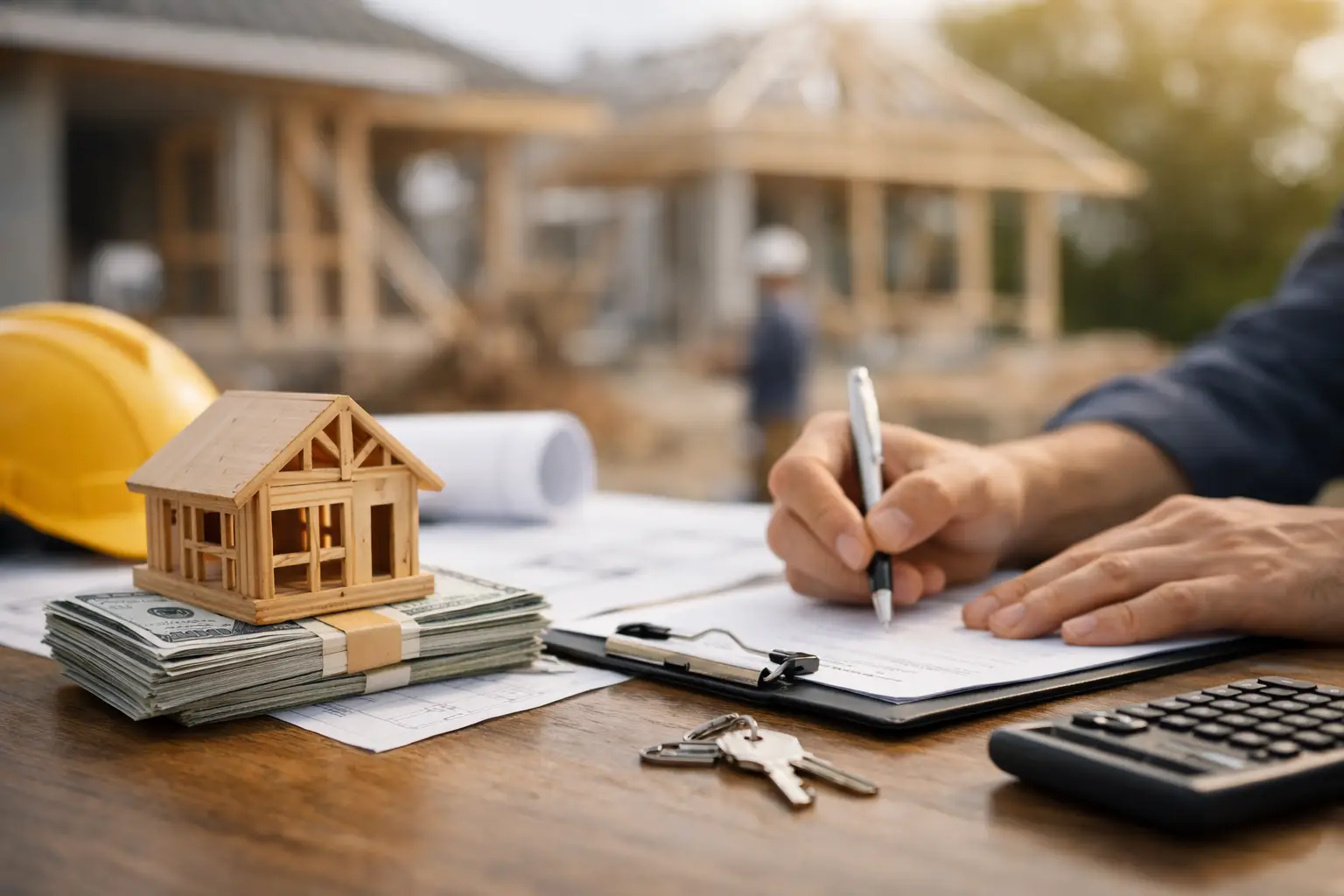
Most owner-builders do not run into trouble because the plans are bad. They run into trouble because the financing structure is wrong. If you are trying to figure out how to fund owner builder project costs in California, the real question is not just where the money comes from. It is whether your loan structure matches the land, budget, timeline, and lender rules tied to your build.
Owner-builder financing is more specialized than a standard mortgage, and for good reason. When you act as your own builder, the lender takes a closer look at project management, cost controls, permits, contingency reserves, and your ability to complete the home on time and on budget. That does not mean funding is out of reach. It means the project has to be presented correctly from the start.
How to fund owner builder project costs
The most common ways to fund an owner-builder project are cash, land equity, a construction-only loan, or a one-time close construction-to-permanent loan. In California, many borrowers use a combination of these rather than relying on one source.
If you already own the lot, the equity in that land may serve as part or all of your down payment. That can be a major advantage, especially when the land has appreciated or has little debt against it. If you are buying land and building at the same time, some lenders can structure financing around both the purchase and the future construction, but the deal has to be underwritten carefully.
Cash is the cleanest source of capital, but it is not always the smartest use of liquidity. Many borrowers want to preserve reserves for overruns, finish upgrades, or interest carry during construction. That is where a properly structured construction loan matters. The right loan can give you leverage based on completed value rather than just current land value or raw cost.
Why owner-builder loans are harder to place
Traditional banks often hesitate on owner-builder deals because the risk profile is different from a standard contractor-led project. A licensed general contractor gives the lender a familiar framework. An owner-builder creates more underwriting questions.
Lenders want to know who is supervising trades, how inspections will be handled, whether a realistic line-item budget exists, and whether there is enough experience to keep the project moving. Some lenders will not consider owner-builder scenarios at all. Others will, but only with stronger credit, larger reserves, lower leverage, or detailed documentation.
That is why owner-builder financing is less about shopping for the lowest advertised rate and more about finding a lender program that actually fits your file. A slightly better structure can matter more than a slightly lower rate if it improves your down payment requirement, draw schedule, or loan-to-value.
The 4 main funding paths for owner-builders
For most California borrowers, there are four practical paths.
The first is all-cash funding. This works when the borrower has enough liquidity to cover land, hard costs, soft costs, permit fees, utility work, and a contingency reserve. The advantage is speed and flexibility. The downside is obvious - tying up large amounts of cash in a project that may take a year or more to complete.
The second is using land equity. If you already own the lot, that equity can reduce the amount of cash needed to get started. In many cases, this is one of the strongest tools available to owner-builders because it improves the leverage profile of the entire transaction.
The third is a construction-only loan. This option funds the build phase and typically requires a second closing later when the home is complete and the loan is replaced with permanent financing. It can work well for borrowers who expect changing market conditions or want flexibility at completion, but it adds another closing and another qualification event.
The fourth is a one-time close construction-to-permanent loan. This is often attractive because it combines the construction phase and long-term mortgage into one structure. You close once, lock in a more streamlined path to permanent financing, and avoid the uncertainty of refinancing after the home is built. For many owner-occupied California borrowers, this is the cleaner option if they qualify.
Finished-value underwriting matters
One of the biggest mistakes borrowers make is focusing only on current costs without understanding future appraised value. Some construction lenders underwrite against the expected completed value of the home, not just the raw cost basis. That distinction can materially affect how much you can borrow.
If your plans add significant value relative to land and construction cost, finished-value-based underwriting may create a stronger financing result. This is especially relevant in California markets where custom home values can substantially exceed direct build cost. But lenders still need a credible appraisal, a realistic budget, and plans that support the projected end value.
What lenders will review before approving funding
If you want to know how to fund owner builder project approval successfully, start with the lender's file review. Approval is usually driven by the strength of the borrower and the strength of the project together.
Your credit profile still matters. Strong scores, manageable debt, and documented income improve your options. Liquidity matters too, because many lenders want to see post-closing reserves even if the land covers much of the equity requirement.
The project file matters just as much. Lenders typically review plans, specs, a detailed cost breakdown, permits or permit status, timeline, and contractor involvement if any part of the work will be subcontracted or managed by licensed professionals. Some lenders are comfortable with owner-builders only if certain major trades are handled by licensed contractors.
Experience can also help, but it is not always a strict requirement. If this is your first build, the file often needs to be stronger in other areas such as reserves, equity, documentation quality, and project simplicity.
Budget discipline is not optional
Owner-builders often underestimate soft costs. The obvious numbers are labor and materials, but lenders also look at architecture, engineering, permits, surveys, soils reports, utility connections, insurance, interest reserves, and contingency funds.
A budget that looks thin will raise concerns immediately. So will a timeline that does not fit the scope of work. If the project takes longer than expected, carrying costs rise and draw timing becomes more complicated. A realistic budget is not just good planning. It is part of getting approved.
Common mistakes when trying to fund an owner-builder build
The first mistake is approaching the project like a standard mortgage transaction. Construction lending is document-heavy and sequence-sensitive. If the plans, budget, permits, and land position are not lined up properly, delays follow.
The second is assuming all lenders view owner-builders the same way. They do not. One lender may decline the file outright, while another may approve it with the right structure. That is why specialized lender access matters.
The third is overestimating leverage. Some borrowers expect to finance nearly everything with minimal cash in. In some cases that is possible, especially with strong land equity or a high completed value, but not every file supports maximum leverage. The answer depends on occupancy, credit, reserves, project type, and lender guidelines.
The fourth is failing to build in contingency. Even strong projects run into change orders, weather delays, material cost swings, or utility surprises. If your plan works only when everything goes perfectly, the financing is too tight.
Best way to prepare before you apply
Before you apply, get your numbers and your narrative straight. Lenders need to understand not just what you are building, but how it will get completed.
That means having ownership details on the lot, preliminary or final plans, a line-item cost breakdown, estimated timeline, and a clear explanation of who is managing the work. If licensed trades will perform major portions of the build, say so. If you have prior building or project management experience, document it. If your income is variable or self-employed, expect a closer review and prepare accordingly.
For California borrowers, it also helps to work with a financing specialist who understands owner-builder programs, land-to-construction structures, higher loan-to-value options, and the appraisal side of custom residential construction. California Construction Loans works in this lane every day, and that specialization can save borrowers months of confusion.
When a loan specialist adds real value
This is not about filling out one application and waiting for a generic answer. The structure itself may need adjustment. You may need to decide between construction-only and one-time close financing. You may need to use land equity strategically. You may need to present the build in a way that aligns with the lender most likely to approve it.
That is where experience shows up in practical ways - fewer dead ends, clearer expectations, and better positioning before underwriting starts.
Funding an owner-builder project is possible, but it rewards preparation and punishes guesswork. If your plans are serious, treat the financing like part of the build itself. The right structure at the beginning gives you a much better chance of finishing the home you actually set out to build.
