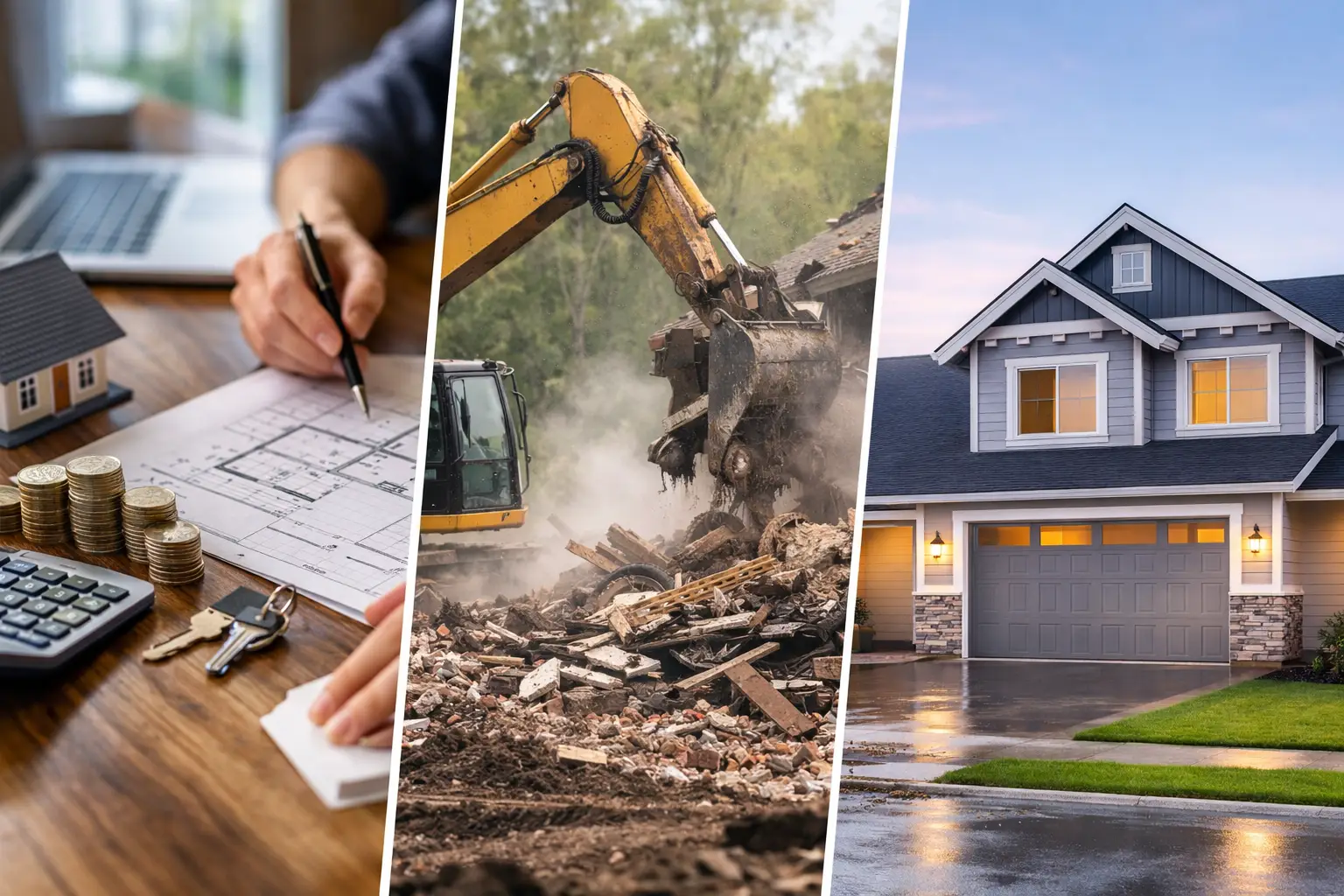
Buying a property for the lot, not the house, changes the financing conversation fast. If you are trying to figure out how to finance a teardown rebuild, the biggest mistake is assuming a standard mortgage will carry the project from purchase through demolition and new construction. In most cases, it will not.
A teardown rebuild usually needs a financing structure built around the end project, not the condition of the existing house. That matters in California, where land value, permit timelines, and finished-home pricing can create both opportunity and underwriting challenges. The right loan can make the project workable. The wrong one can leave you short on cash halfway through demolition, plans, or vertical construction.
How to finance a teardown rebuild the right way
Most teardown projects fall into one of two paths. You either already own the property and want to replace the home, or you are buying a property specifically to tear it down and build new. The financing options are similar, but the structure changes depending on when you acquire the land and how much equity you have.
For many borrowers, the strongest fit is a construction loan based on the future value of the completed home. This is often called finished-value or as-completed appraisal lending. Instead of focusing only on what the property is worth today with an older house on it, the lender evaluates the projected value after the new home is built. That distinction is critical because teardown rebuilds rarely pencil well if financing is tied only to present value.
A one-time close construction-to-permanent loan is often the cleanest solution for an owner-occupied primary residence. It allows you to close once, fund the acquisition or existing payoff, cover construction costs, and then convert into permanent financing when the home is complete. That reduces repeat closing costs and helps lock in a long-term plan from the start.
A construction-only loan can also work, especially for borrowers who want flexibility or expect to refinance separately after completion. This option is common when the project profile is more complex, the borrower wants to shop the permanent mortgage later, or the lender structure calls for separate phases.
The pieces a teardown rebuild loan may need to cover
A true teardown rebuild budget is broader than many borrowers expect. The loan may need to include the purchase price or existing land payoff, demolition costs, architectural plans, engineering, permits, utility work, site preparation, hard construction costs, contingency reserves, interest reserves, and sometimes carrying costs during the build.
Not every lender allows every line item, and not every project is underwritten the same way. That is why loan structure matters so much. A general bank may be comfortable with a straightforward purchase mortgage or a basic construction file, but teardown rebuilds often involve layered questions about habitability, valuation, timing, and permit readiness.
The more complete your budget is upfront, the better. Borrowers get into trouble when they underestimate soft costs or assume they can easily add money later. Construction lenders want a defined scope, realistic plans, and a contractor-backed budget they can underwrite.
What lenders look at first
When a lender reviews a teardown rebuild, they are not just asking whether you qualify personally. They are also asking whether the project is financeable.
Credit, income, assets, and reserves still matter. So does your down payment. But on these loans, lenders also evaluate the property, the plans, the build contract, the projected finished value, and the construction timeline. If the project is owner-builder, they will look closely at your experience and the program guidelines, because owner-builder financing is more specialized than standard contractor-led construction lending.
Project readiness is a major factor. Some lenders can work earlier in the process, while others want plans, specs, and permits substantially complete before closing. If you are still at the concept stage, that does not always stop financing, but it does affect which programs are available and how quickly you can move.
Down payment and equity: where borrowers get surprised
One of the first questions people ask is how much cash they need. The answer depends on whether you already own the property, the current land value, the projected completed value, occupancy type, and the loan program.
If you already own the home free and clear, or you have meaningful equity in the lot, that equity may count toward your required contribution. In some cases, the land itself becomes part of the down payment. That can significantly reduce the cash you need at closing.
If you are purchasing a teardown property, your down payment is usually based on a combination of land acquisition and construction leverage. The stronger the finished-value appraisal and the cleaner the file, the better the options tend to be. Borrowers who only compare rates often miss the bigger issue, which is leverage. On a teardown rebuild, getting the right loan-to-value structure can matter more than chasing the lowest headline rate.
Appraisal is where the deal often lives or dies
A teardown rebuild is underwritten on a vision that has not been built yet. That means the appraisal is not just a formality. It is central to the loan.
The appraiser typically reviews the plans, specifications, lot characteristics, and comparable sales for new construction in the area. In high-cost California markets, this can get nuanced quickly. A great design does not automatically translate into appraised value, especially if the finished home is pushing beyond the strongest comps in the neighborhood.
This is where specialized construction-lending guidance helps. The goal is not just to submit a loan package. It is to structure the project so the appraisal, cost basis, and loan amount have a realistic path to approval. If your planned home materially exceeds what the market supports, you may need a larger down payment or a revised scope.
Buying first, tearing down later
Some borrowers buy the property with a conventional loan and plan to sort out construction financing later. That can work, but it is not always the most efficient path.
The issue is timing and transaction cost. If you close with one loan to acquire the property, then refinance into a construction loan after plans and permits are ready, you may face a second closing, additional fees, and a different underwriting environment than expected. If the property condition changes, market values shift, or guidelines tighten, your later refinance may be less favorable than you assumed.
For borrowers who know they intend to tear down and rebuild, it is often better to evaluate a dedicated construction financing strategy before purchase. That lets you understand your maximum loan amount, cash requirement, and approval path before you are committed.
How to finance a teardown rebuild if you already own the home
If the property is already yours, you may be in a stronger position than you think. Existing land value can be a powerful asset in construction underwriting.
The first question is whether there is a current mortgage to pay off. The second is how much usable equity the lender can recognize. From there, the financing may be structured to pay off the existing loan, fund demolition, and finance the new home in one coordinated package.
This is one reason many California homeowners choose specialized construction financing instead of trying to piece together a cash-out refinance, personal funds, and separate building draws. A teardown rebuild is a large project with moving parts. It tends to work better when the financing is built for construction from the beginning.
Common mistakes that make approval harder
The most common problem is treating a teardown like a simple remodel. It is not. Once the existing house is coming down, the lender is financing land plus new construction, and the documentation needs to reflect that.
Another mistake is going too far down the design path without confirming financing limits. It is easy to fall in love with a floor plan that costs more than the site and market can support. A third issue is incomplete documentation. Missing plans, vague budgets, and contractor bids that do not match the scope can delay or derail approval.
Some borrowers also wait too long to ask whether owner-builder financing is realistic for their scenario. If you want to act as your own builder, that should be discussed early, not after the file has been underwritten around a licensed general contractor.
What to do before you apply
Start by getting clear on the project itself. Is this your primary residence, a second home, or an investment build? Are you buying the lot now or using land you already own? Will a licensed contractor build it, or are you pursuing an owner-builder path?
Then get realistic numbers around plans, demolition, hard costs, soft costs, and contingency. A rough guess is not enough. Lenders want a package that looks buildable, not theoretical.
Most important, talk to a lender who actually understands residential construction financing. Teardown rebuilds are not edge cases in specialized lending, but they are often mishandled by institutions that do not structure these loans every day. California Construction Loans works with borrowers across the state to evaluate project readiness, leverage options, and loan structures that fit the property and the build plan.
If you are serious about a teardown rebuild, the financing decision should come before the bulldozer. A well-structured loan does more than fund the project. It gives you a cleaner path from old house to finished home, with fewer surprises when timing, valuation, and cash requirements start to matter most.
