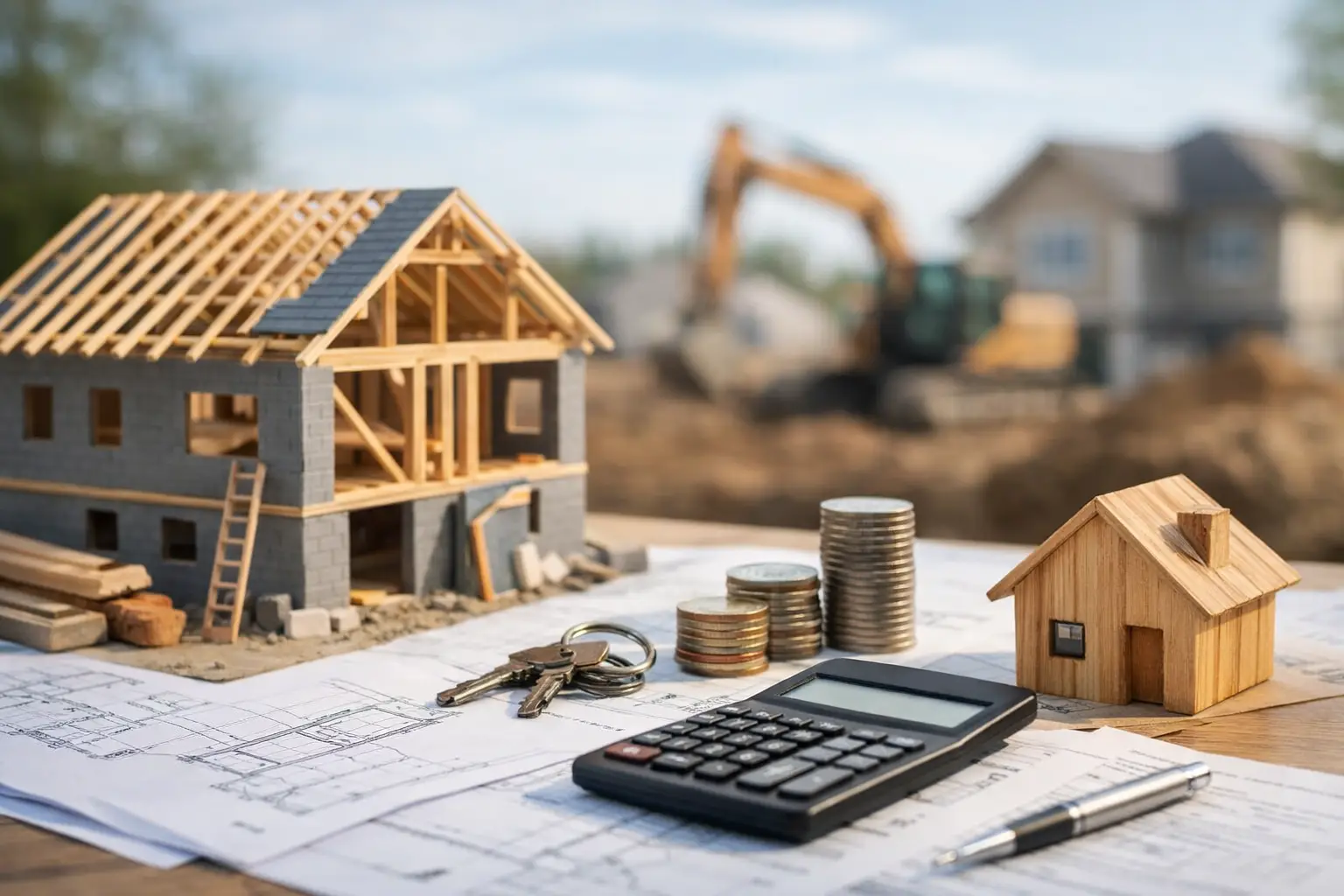
If you are pricing a custom home build or major residential project, construction to perm financing rates can change the entire math of the deal. A small rate difference affects your monthly payment, your qualifying power, and in some cases whether your project moves forward at all. That is why borrowers in California need more than a quick online quote - they need to understand how these loans are actually priced.
A construction-to-permanent loan combines the build phase and the long-term mortgage into one structure. Instead of closing one loan for construction and another after the home is finished, you close once and convert into permanent financing when the project is complete. For many borrowers, that means lower closing friction, fewer moving parts, and a cleaner path from lot to finished home.
What affects construction to perm financing rates?
Rates are never set by one factor alone. In residential construction lending, pricing reflects both borrower strength and project strength. Lenders are evaluating not only your ability to repay the loan, but also the risk of the construction itself.
Credit score still matters, and strong reserves can help. So can a lower loan-to-value ratio, especially when you are bringing cash into the project or already own the land with significant equity. Occupancy also matters. Owner-occupied projects generally price more favorably than second homes or investment builds because lenders view them as lower risk.
The project itself carries weight. A straightforward owner-occupied custom home with licensed contractors, approved plans, realistic costs, and a documented timeline will usually receive better treatment than a speculative build, a partially completed project, or an owner-builder file with limited experience. The cleaner the file, the easier it is for a lender to offer competitive terms.
Loan size can also shift pricing. In California, many projects involve higher balance loans because of land values, build costs, and finished home values. Some lenders are aggressive in jumbo construction lending, while others price up quickly once the loan amount crosses certain thresholds. That is one reason rate shopping in this space is not as simple as comparing standard mortgage ads.
Why these rates look different from standard mortgage rates
Borrowers are often surprised when they compare construction financing to a regular purchase or refinance loan. Construction lending includes added risk during the build phase. There are draws, inspections, contingency requirements, budget reviews, and completion risk. Lenders know that a home under construction is not the same collateral as a finished, fully marketable property.
Because of that, the rate on a construction-to-permanent loan may run higher than a plain vanilla conforming mortgage. The trade-off is that you are gaining access to financing designed for a project that standard mortgage products do not handle well. In many cases, the right structure matters more than chasing the absolute lowest advertised rate.
That is especially true when borrowers need higher leverage based on finished value, want to include land payoff in the loan, or need flexibility around project type. A lower rate on the wrong loan structure is not a better deal if it creates qualification issues or leaves a financing gap during construction.
How California borrowers should think about rate quotes
In California, residential construction costs vary sharply by market, county, and project type. Coastal custom homes, hillside builds, rebuilds after teardown, and major remodels all bring different underwriting considerations. That means a quote without context is often meaningless.
When comparing construction to perm financing rates, ask what the quote actually assumes. Is it based on your current credit profile? Does it assume owner occupancy? Is the lender underwriting to total cost or to appraised completed value? Are they allowing land equity toward the down payment? Is the quoted rate tied to one-time close financing, or is it only for the permanent phase after construction ends?
These details matter because two rate quotes can look similar on paper while producing very different outcomes. One lender may offer a slightly lower note rate but require more cash into the project. Another may offer a better overall structure because it recognizes finished value more aggressively, which can preserve your liquidity and make the project possible.
One-time close vs two-close financing
One-time close loans are a major reason borrowers look at this category. You close once, build the home, and convert into permanent financing without a second full closing later. That can reduce uncertainty if rates move during construction, although each program handles that conversion differently.
Two-close financing separates the construction loan from the long-term mortgage. Sometimes this gives borrowers more flexibility on the takeout loan later, but it can also create added risk. If market rates rise, credit changes, or the final appraisal comes in below expectations, the permanent financing step may become more difficult or more expensive.
From a rate perspective, one-time close financing is not automatically cheaper. But for many borrowers, it is more efficient and easier to manage. The right choice depends on your timeline, equity position, and tolerance for future financing uncertainty.
What helps you qualify for better construction to perm financing rates
Better pricing usually starts before the loan application. Borrowers who prepare the project properly tend to have stronger options.
A complete package makes a difference. Final or near-final plans, a realistic budget, contractor documentation, specifications, and a clear timeline show lenders that the project is financeable. If you already own the lot, documenting land value and any existing liens is equally important. In some cases, land equity can reduce your effective loan-to-value ratio and improve both approval odds and pricing.
Your personal profile matters too. Strong credit, stable income, documented assets, and post-closing reserves can all support better terms. If your income is more complex, such as self-employment or variable compensation, it is even more important to work with a specialist who knows which lenders can handle that file correctly.
Owner-builders should expect tighter scrutiny. Some lenders will not consider owner-builder projects at all, while others will with the right experience, liquidity, and documentation. Rates and down payment expectations are usually less favorable than they are for a fully licensed general contractor build. That does not mean the loan cannot be done - it means the structure has to fit the actual risk profile.
Rate is important, but so is leverage
Many borrowers focus first on interest rate, which is understandable. But in construction lending, leverage often matters just as much. If a lender will recognize the completed appraised value of the project and allow a higher loan-to-value based on that number, the benefit can outweigh a modest rate difference.
This is where specialist construction lenders stand apart from general retail banks. A bank may offer a familiar name and a simple pitch, but construction files often get constrained by conservative overlays, limited product menus, or staff who do not understand how to structure residential builds. Access to multiple lender programs can create more room for the borrower, especially on larger California projects.
California Construction Loans works in that specialist lane. The value is not just getting a rate quote. It is getting the right financing structure for your land, build budget, appraised finished value, and occupancy goals.
When it makes sense to act now
Trying to perfectly time rates is rarely the best strategy if your plans, permits, and budget are ready. Construction costs can change, land opportunities can disappear, and project delays can create their own financial drag. If you are close to shovel-ready, the better move is often to get pre-qualified, review real program options, and see how the numbers work under current market conditions.
That does not mean rushing. It means replacing guesswork with lender-specific guidance. Once you know your likely rate range, required cash contribution, and loan structure, you can make an informed decision instead of relying on generic mortgage headlines.
If you are building in California, the real question is not whether construction to perm financing rates moved an eighth of a point this week. The real question is whether your project is being matched to the right lender, the right leverage, and the right long-term payment strategy. Get that part right, and the path to building becomes much clearer.
