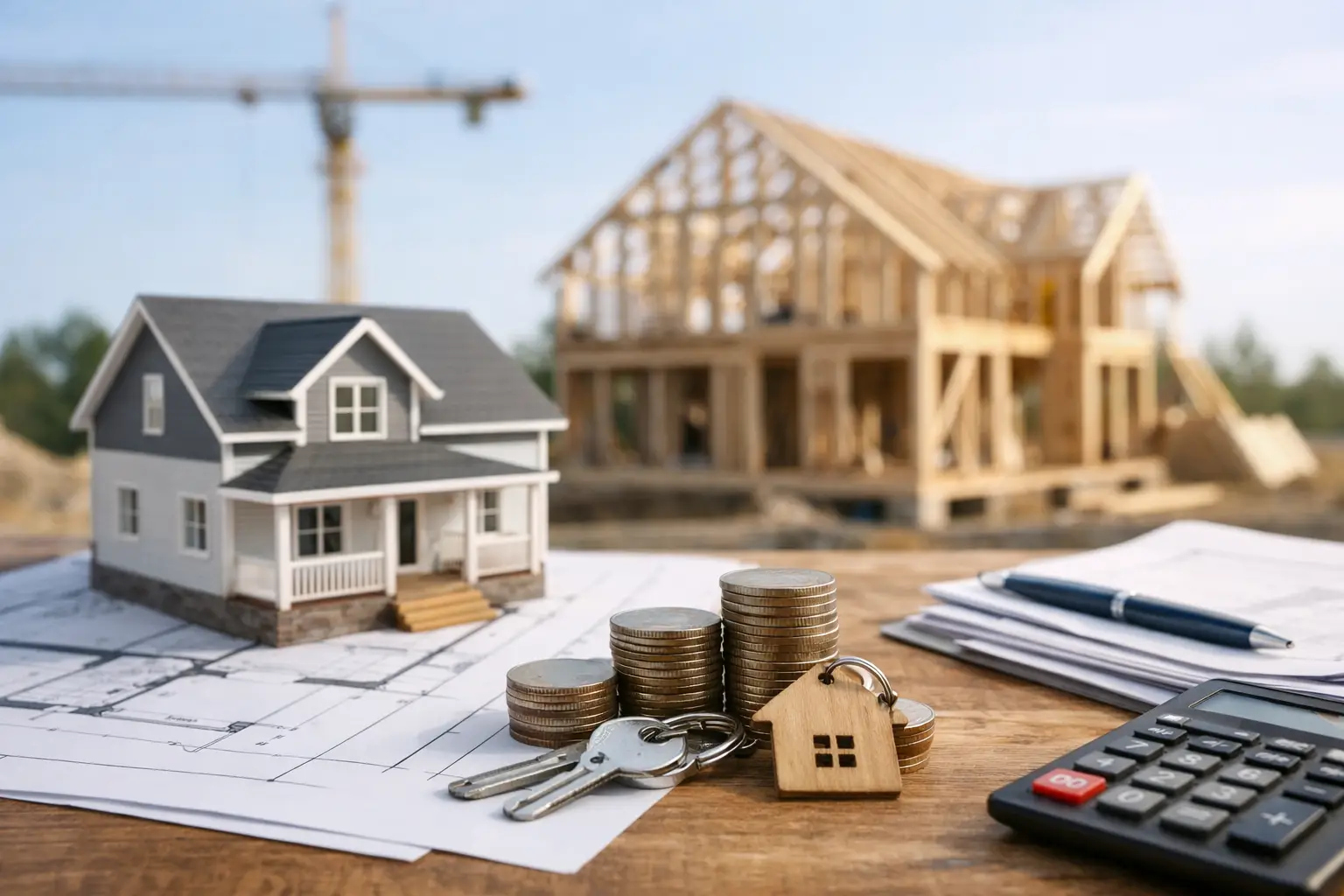
Building a home with less cash upfront sounds simple until you start calling lenders. That is where construction to perm financing 5 down gets a lot of attention - and a lot of confusion. Some borrowers hear "5% down" and assume it works exactly like a standard purchase loan. It does not. With construction lending, the structure, the land position, the appraisal, and the builder approval all matter.
For California borrowers, that difference is not minor. Construction loans are more specialized than regular mortgages, and low-down-payment options are usually available only when the file is strong, the project is well documented, and the lender can make sense of the finished value. If you are trying to build a primary residence and keep your cash requirement as low as possible, the right question is not just whether 5% down exists. The right question is whether your project fits the version of that program that lenders will actually approve.
How construction to perm financing 5 down actually works
A construction-to-permanent loan combines the construction phase and the long-term mortgage into one transaction. Instead of closing on a short-term construction loan and then refinancing into a permanent mortgage later, you close once at the beginning. The loan funds construction through draws, and once the home is complete, it converts into the permanent loan.
That one-time-close structure matters if you are trying to preserve cash. It can reduce duplicate closing costs, avoid the risk of needing to re-qualify after construction, and create more predictability around your long-term financing. For borrowers targeting a lower down payment, that efficiency can be a real advantage.
The phrase "5 down" usually means the borrower contributes 5% of the total project cost or appraised basis, depending on the lender's program. But this is where details matter. Some lenders calculate the equity requirement using total acquisition cost plus construction budget. Others lean more heavily on the as-completed appraised value. If you already own the land, your land equity may count toward the required contribution, which can reduce or even eliminate the need for additional cash.
That is why one borrower may hear 5% down while another gets quoted 10% or more for what looks like a similar project. The structure is never just about the percentage. It is about the full file.
Who usually qualifies for 5% down construction financing
Low-down-payment construction lending tends to favor owner-occupied primary residence projects. If you are building a custom home that will be your primary home, your odds are generally better than if you are building a second home, a spec property, or a pure investment project.
Lenders also look closely at credit profile, reserves, debt-to-income ratio, builder strength, project feasibility, and documentation quality. A borrower with strong income, clean credit, a licensed builder, detailed plans, and realistic cost breakdowns is easier to approve than a borrower with inconsistent income and a half-finished project budget.
In many cases, 5% down options are tied to conforming or government-backed loan structures, although those programs are not universal and lender overlays can be significant. California borrowers often run into loan amount limits, county-specific considerations, and appraisal issues that affect whether a true 5% structure is available.
If the numbers do not fit a low-down-payment program, that does not mean the deal is dead. It may simply mean the loan needs to be structured differently - with more equity, a different permanent loan option, or an underwriting approach based on finished value rather than a stricter cost basis.
The land changes everything
One of the biggest misconceptions in construction lending is that every borrower starts from zero. Many do not. Some already own the lot. Others are buying land as part of the same transaction. Those two scenarios are underwritten very differently.
If you already own the lot and have equity in it, that equity may serve as part or all of your down payment requirement. For example, if the lot is worth more than what you owe on it, the lender may count that position toward your required borrower contribution. That can make a 5% down structure more realistic, even if you are not bringing much additional cash to closing.
If you are buying the land and building at the same time, the lender has to evaluate the combined land acquisition and construction budget together. In that case, the cash requirement may feel more stringent because you are financing more of the total project from day one.
This is one reason specialized guidance matters. A bank that treats your deal like a standard mortgage request may miss the strongest angle in your file.
Why appraised value matters so much
Construction loans are often won or lost on the appraisal. Not the current dirt value, but the as-completed value - what the home is expected to be worth when finished based on plans, specs, and comparable properties.
If the appraised finished value supports the project well, it can improve leverage and help the loan fit within available guidelines. If the appraisal comes in light, your required cash contribution may rise quickly. A project that looked like 5% down on paper can become a 10% or 15% down deal once the valuation is finalized.
California borrowers run into this often with custom homes, rural sites, unique designs, or markets where comparable new construction sales are limited. The more specialized the project, the more important it is to present strong plans, realistic budgets, and a lender-friendly file from the start.
What lenders want to see before they say yes
Borrowers often focus on the down payment number and overlook the project-readiness standard. Construction lenders do not just finance an idea. They finance a build package.
That usually means complete plans, specifications, a signed builder contract or clear construction agreement, line-item cost breakdowns, site details, permits or permit status, and a realistic timeline. If pieces are missing, approval can stall or the loan may be sized more conservatively.
Builder approval is also a major factor. Most lenders want an experienced, licensed general contractor with financial stability and a track record of completing similar homes. Owner-builder financing exists, but it is a narrower lane and rarely the easiest path for low-down-payment execution.
The strongest 5% down files usually have very little ambiguity. The borrower is qualified, the builder is approved, the plans are complete, and the budget makes sense.
Where 5% down can fall apart
There is no benefit in pretending every borrower can get this done with minimal cash. Sometimes the answer is no, or at least not yet.
A few common issues push deals out of low-down-payment territory. The debt-to-income ratio may be too high once the projected housing payment is included. The loan amount may exceed the range where favorable low-down-payment structures work best. The borrower may be self-employed with documentation that needs more seasoning. The builder may not meet lender requirements. Or the appraisal may not support the desired leverage.
Sometimes the obstacle is timing. If permits are not ready, if plans are still changing, or if the borrower is trying to finance a project already underway, available options may narrow. Construction lending rewards preparation.
That is why experienced loan structuring matters more than rate-shopping at the beginning. The cheapest-looking quote is irrelevant if the lender cannot close the deal.
A better way to think about affordability
If your goal is to build with 5% down, focus on total project strength, not just the headline number. A slightly higher down payment with a better one-time-close structure may be safer than a thinly approved file that leaves no room for change orders, reserve requirements, or appraisal pressure.
The right loan is the one that gets you from lot and plans to completed home without forcing a second financing problem later. That could mean using existing land equity, adjusting the construction budget, revising the scope, or matching the file to a lender that understands finished-value underwriting. California Construction Loans helps borrowers sort through those options every day.
If you are serious about building in California, the best next step is to get your project reviewed before you commit to assumptions about down payment. A real construction loan analysis can tell you whether 5% down is achievable, what the trade-offs look like, and how to structure the file to give yourself the strongest path to approval. The sooner you know that, the better decisions you can make on land, plans, builder selection, and timing.


