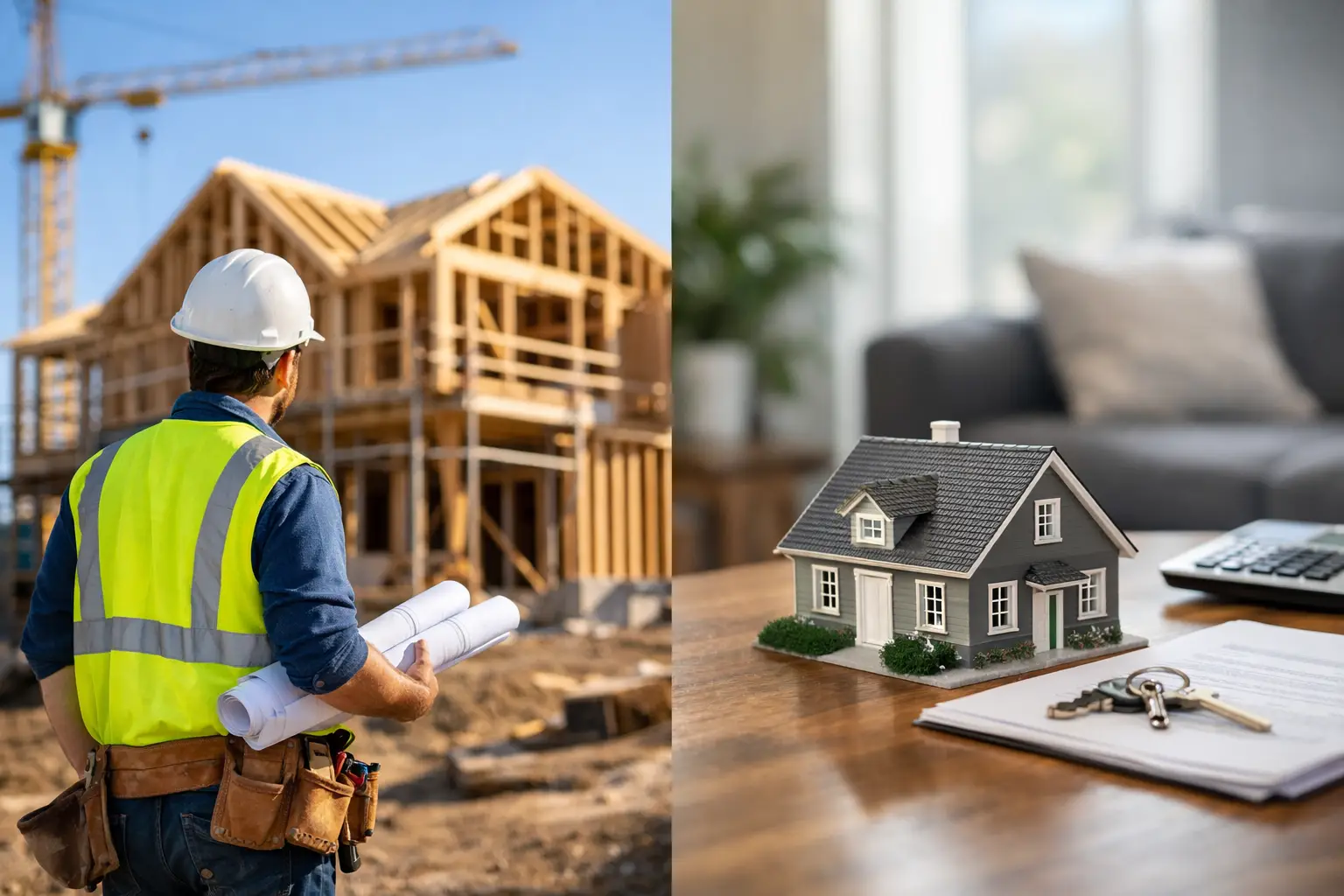
If you are comparing a construction only versus permanent mortgage, you are already asking the right question. The loan structure you choose affects your cash to close, your approval path, your timeline, and how much friction you deal with during and after the build. For California borrowers building a custom home, financing a major remodel, or combining land and construction, this is not a small detail. It is one of the biggest decisions in the entire project.
Most borrowers do not need a lecture on definitions. They need clarity on which option fits their plans, income, equity position, and tolerance for complexity. A construction-only loan can make sense when flexibility matters most. A construction-to-permanent structure can make sense when you want to lock in the exit strategy from day one. The right answer depends on the project, the borrower, and the lender guidelines that apply to both.
Construction only versus permanent mortgage: the real difference
A construction-only loan is short-term financing used to fund the build phase. Once construction is complete, that loan is paid off, usually by refinancing into a separate permanent mortgage. That means two stages: the construction loan now, and the long-term mortgage later.
A permanent mortgage, in this context, usually refers to a construction-to-permanent loan. You close one loan that covers the construction phase and then converts into the long-term mortgage after completion. Instead of reapplying for a second loan later, the permanent financing is built into the original structure.
On paper, the difference seems simple. In practice, the consequences are significant. One option gives you more freedom to rethink your long-term financing later. The other can reduce closing costs, documentation duplication, and interest-rate uncertainty.
When a construction-only loan makes sense
A construction-only loan tends to fit borrowers who want flexibility, expect their financial profile to improve during construction, or may choose a different permanent lender after the project is complete. It can also be useful when the project has moving parts that make it harder to lock in the permanent phase upfront.
For example, a borrower may be selling another property during construction, expecting a major reduction in debt, or planning to document income differently by the time the home is finished. In that case, taking a separate permanent mortgage later may create more options.
Construction-only financing can also be attractive for higher-end custom homes and more complex residential projects where the build phase itself is the primary challenge. Some borrowers simply need a lender that understands plans, specs, budgets, draw schedules, and finished-value underwriting. They can address the long-term mortgage once the house is complete and easier to finance under standard guidelines.
The trade-off is obvious. You are betting that permanent financing will still be available on acceptable terms when the build is done. If rates move up, your income changes, or market conditions tighten, your exit loan may cost more or require more cash than expected.
When a permanent mortgage structure is the better fit
If your main priority is certainty, the permanent mortgage route often has the edge. With a one-time close construction-to-permanent loan, the long-term financing is approved and documented at the start. You close once, build the home, then convert into the permanent phase.
That can reduce risk in several ways. You avoid a second full closing. You may save on closing costs. You are less exposed to the possibility that lending standards will change before the project finishes. For many owner-occupied borrowers in California, especially those building a primary residence, that predictability matters.
It also simplifies planning. You know earlier what your permanent payment is likely to look like, how reserves will be evaluated, and whether the final loan structure supports your long-term budget. For borrowers stretching to make a custom home project work, fewer unknowns can be a major advantage.
Still, a permanent mortgage structure is not always the easiest approval. Some one-time close programs have stricter overlays, tighter documentation standards, or less flexibility for unusual scenarios. If the project, borrower profile, or property type falls outside the cleanest box, a construction-only loan may still be the better path.
Cost is not just about the rate
Borrowers often ask which option is cheaper. That is the right question, but it needs a broader answer. Comparing construction only versus permanent mortgage options based only on interest rate misses the real picture.
With a construction-only loan, you may pay one set of closing costs for the construction loan and another for the takeout mortgage. You may also face appraisal updates, title costs, lender fees, and new qualification requirements later. If rates improve by the time construction ends, that flexibility can help you. If rates worsen, it can hurt you.
With a one-time close permanent structure, the upfront pricing may or may not look lower, but you are often avoiding a second closing. You are also reducing the risk of paying more later because market conditions changed.
The practical answer is this: the lower-cost option depends on timing, loan size, borrower strength, and how likely you are to benefit from shopping the permanent loan later. Cheap on day one is not always cheap over the life of the project.
Approval standards can push the decision
The loan structure you want is only one side of the equation. The other side is what lenders will actually approve.
Construction lending is heavily driven by details: land ownership, down payment, reserves, debt-to-income ratio, credit, contractor strength, plans and specifications, permits, and the appraised finished value. In California, where build costs and home values can be high, these details matter even more.
If you already own the lot and have significant equity, either option may work well. If you are trying to finance land purchase plus construction with higher leverage, the lender pool may narrow. If you are an owner-builder or your project is a major remodel rather than ground-up construction, that narrows the field again.
This is where specialized guidance matters. General mortgage banks often treat construction financing like a side product. It is not. The right structure depends on lender appetite, not just textbook definitions. California Construction Loans works with borrowers who need practical answers on loan structure, not generic advice that falls apart in underwriting.
How to decide between construction only versus permanent mortgage
Start with your exit plan. If the home will be your long-term residence and your income, credit, and documentation are already solid, a construction-to-permanent structure is often the cleaner choice. It gives you one approval path and fewer moving parts.
If your financial picture is likely to improve during the build, or you want the freedom to choose permanent financing later, construction-only can be a smart strategy. That is especially true if your current scenario is harder to fit into a one-time close program but likely to look stronger after completion.
Next, look at the project itself. Straightforward owner-occupied builds are easier candidates for one-time close financing. More complex projects, unusual properties, higher-end custom homes, or layered land-and-construction scenarios sometimes fit better with a separate construction phase.
Then look at your risk tolerance. Some borrowers value optionality. Others want certainty. Neither is wrong. But the wrong loan structure for your mindset can create stress throughout the project.
Finally, look beyond the advertised product name. Two lenders may both offer a permanent mortgage option, but one may allow stronger leverage based on finished value, while another may require more cash, stronger reserves, or a lower loan-to-value ratio. The same is true for construction-only loans. The label is only the starting point.
The California factor
California construction lending has its own realities. Land values are higher. Build costs move quickly. Appraisals can be challenging on custom projects. Coastal, rural, and fire-zone properties may present additional underwriting issues. Large loan amounts are common, and standard bank products do not always adapt well.
That is why borrowers here benefit from structuring the financing correctly from the start. If you choose a construction-only loan when a one-time close loan would have protected your long-term payment, that mistake can be expensive. If you force a permanent mortgage structure onto a project that needs more flexibility, that can stall the loan before the first draw is ever funded.
The right move is usually not the most familiar mortgage option. It is the one that fits the real project on the ground.
A good construction loan strategy should do two things at once: get your project funded now and make the next stage easier, not harder. If you are weighing construction only versus permanent mortgage options, focus less on the label and more on the structure, leverage, and exit path. That is where the smart decision gets made.
