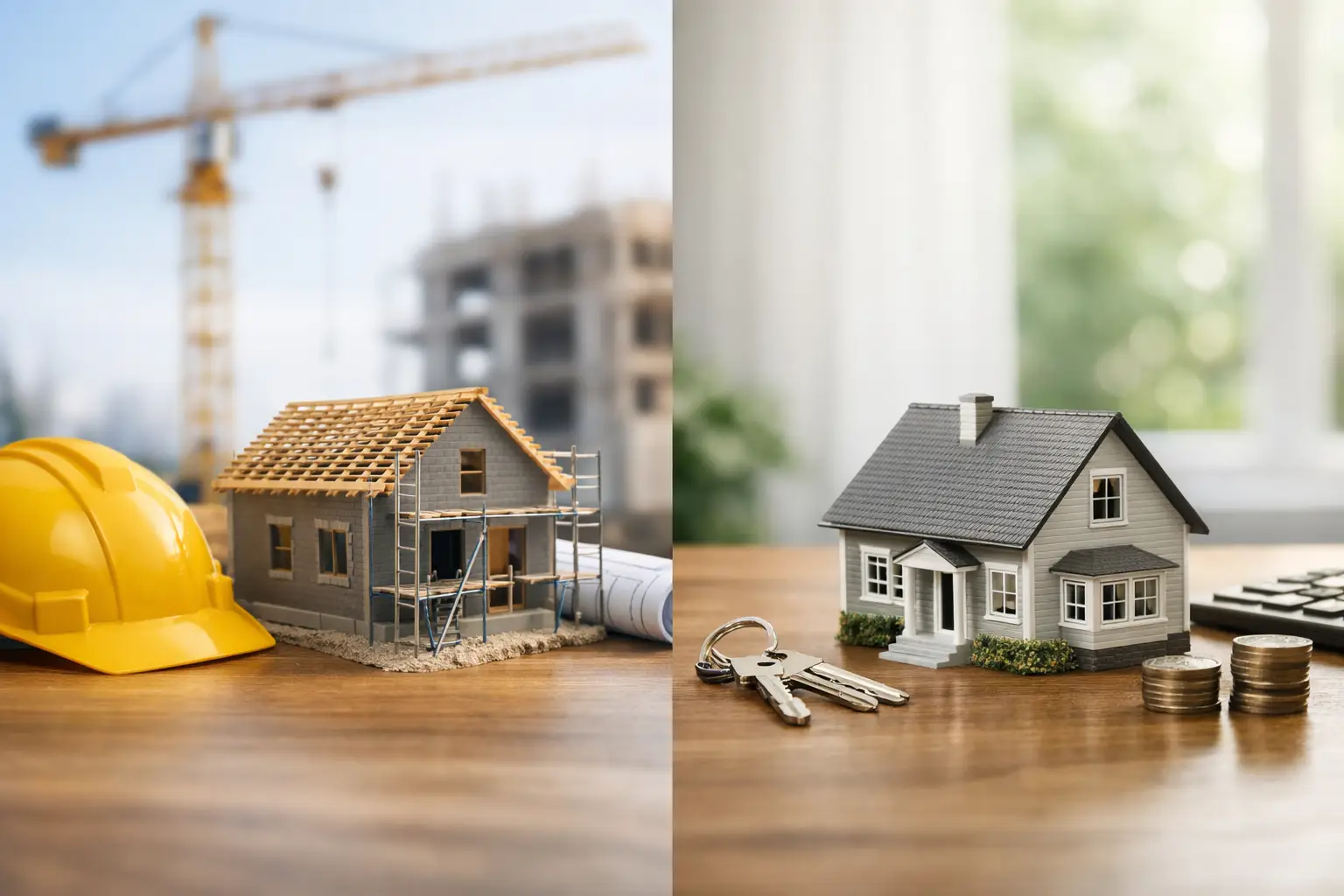
If you are pricing land, sketching plans, or trying to figure out how to finance a major build in California, the difference between a construction loan versus mortgage is not a small detail. It determines how your loan is approved, how funds are released, what your payments look like, and whether your project is even financeable under standard lending rules.
Many borrowers start by assuming a mortgage will cover any residential property goal. That works when you are buying an existing home. It usually does not work when you are building from the ground up, tearing down and rebuilding, or taking on a major remodel. Construction financing follows a different set of rules because the lender is funding a project in stages, not simply lending against a completed house.
Construction loan versus mortgage: the core difference
A traditional mortgage is designed for a finished property. The home already exists, the collateral is clear, and the lender can evaluate value based on current condition and comparable sales. You borrow one loan amount, close once, and begin making payments under a standard repayment schedule.
A construction loan is built around a process, not just a property. The lender is financing labor, materials, permits, and time. Instead of handing over the full loan amount at closing, funds are usually released in draws as construction progresses. That means underwriting is not only about your income, credit, and assets. It is also about your plans, budget, builder, timeline, permits, and projected finished value.
That distinction matters because construction lending is inherently more complex. There are more moving parts, more documentation, and more opportunities for delays. The right loan structure can make a project feasible. The wrong one can leave a borrower underfunded or stuck trying to force a custom build into a loan product that was never meant for it.
How a mortgage works
With a standard mortgage, the lender is focused on a completed home purchase or refinance. Appraisal is based on what exists today. The closing process is generally simpler because there is no staged disbursement of funds, no draw inspections, and no construction administration.
For a buyer purchasing an existing home, this is the cleanest path. Rates may be lower than construction financing, qualification standards are familiar, and monthly payments begin under a standard amortizing schedule right after closing.
Mortgages are best suited to borrowers who want certainty and speed, and who are not trying to create value through new construction or major redevelopment. If the house is already built and livable, a traditional mortgage is usually the right tool.
How a construction loan works
A construction loan is designed for projects where the home is being built, substantially renovated, or completed from land through final construction. The lender reviews the full scope of work before approval. That often includes plans, specs, contractor agreements, cost breakdowns, and evidence that the project is realistic and properly structured.
During construction, money is disbursed in phases. The borrower does not usually receive all funds at once. Instead, the lender releases draws after verifying that work has been completed according to the approved budget and timeline. This draw process protects both the lender and the borrower, but it also adds oversight and paperwork.
Payments during construction are often interest-only on the amount disbursed, not the full approved balance. Once the project is complete, the loan may either convert into a permanent mortgage or require a separate refinance, depending on the product.
That is why one-time close construction-to-permanent loans are so attractive. They can reduce duplicate closings, lower transaction friction, and give borrowers a more predictable path from groundbreaking to long-term financing.
Approval is different - and more project-driven
One of the biggest misunderstandings in the construction loan versus mortgage conversation is assuming the borrower is the only thing being underwritten. In construction lending, the project is being underwritten too.
A mortgage lender mostly asks whether you qualify to repay a loan on a finished home. A construction lender asks that, but also wants to know whether the build itself makes sense. Is the budget supported? Is the builder acceptable? Is there enough equity or down payment? Will the appraised finished value support the loan amount? Are permits and plans far enough along to move forward?
This is where many borrowers run into trouble with generalist banks. If the project is outside a narrow box, the answer is often no, or the leverage is too low to be useful. Specialized construction lenders can often structure around issues that standard mortgage channels are not equipped to handle.
Appraisal and value are not treated the same way
A mortgage appraisal is based on the property as it sits today. That is straightforward when the home is already complete.
Construction financing often uses future or finished value. In other words, the lender may underwrite based on what the property is expected to be worth when the work is done, assuming plans and specs are completed as proposed. For borrowers building in higher-cost California markets, that can make a significant difference in leverage and feasibility.
This is especially important for custom home projects, land-plus-construction transactions, and major remodels where current value does not reflect the end result. If financing is based only on present condition, borrowers may not be able to access enough capital to complete the project.
Down payment, equity, and cash requirements
A standard mortgage down payment depends on the property type, occupancy, and loan program. In some cases, buyers can put relatively little down.
Construction loans usually require more borrower investment, although the exact amount depends on the program, the borrower profile, and the project. If you already own the land, that land equity may count toward your contribution. If you are buying the lot and building at the same time, the lender will look closely at total project cost versus finished value.
This is one reason specialized guidance matters. Many borrowers assume they need a much larger down payment than they actually do, or they underestimate how much liquidity they need for reserves, contingency, and pre-construction expenses. Proper structuring can change the numbers materially.
Which loan is right for your situation?
If you are buying a move-in-ready house, use a mortgage. If you are building a custom home, financing a teardown, completing a major remodel, or trying to combine land and construction into one strategy, you are usually looking at a construction loan.
There are gray areas. A light renovation may fit within renovation financing or even a traditional purchase structure in some cases. A major remodel that changes livability, layout, or value significantly often needs construction-style lending. An owner-builder project may be possible, but lender options are more limited and documentation standards are usually tighter.
The right answer depends on scope, timing, equity, and how the property will be used. Owner-occupied projects often have more favorable options than speculation or investment construction. Borrowers with strong income and credit may still be declined if the plans are incomplete or the project is not lender-ready. On the other hand, a well-structured project can often qualify even when a retail bank has already said no.
Why borrowers confuse the two
Part of the confusion comes from the end goal. In both cases, you are financing a home. But the route to that home is completely different.
A mortgage finances a finished asset. A construction loan finances risk, progress, and future value. That is why timelines are longer, approvals are more involved, and lender expertise matters more.
For California borrowers, those differences are amplified by higher land prices, stricter building requirements, permit complexity, and larger total loan amounts. You do not just need a lender. You need a financing structure that actually matches the project.
California Construction Loans works with borrowers who need that level of specialized construction financing guidance, especially when a conventional mortgage does not fit the deal.
What to do before you apply
Before applying for either loan type, get clear on the property stage. Are you buying a completed home, buying land, already own land, or planning a substantial remodel? Then organize your financials, review your liquidity, and define your timeline realistically.
If your project involves building, have as much of the package ready as possible. Plans, budgets, contractor information, and a clear scope of work improve your chances of getting accurate terms early. This also helps identify whether a one-time close, construction-only, owner-builder, or major remodel loan is the better fit.
The best financing decision is not the one with the simplest name. It is the one that fits the real project, supports the budget, and gets you from concept to completion without forcing the deal into the wrong loan box. If you are comparing a construction loan versus mortgage, start with the project itself and the right path usually becomes clear.


