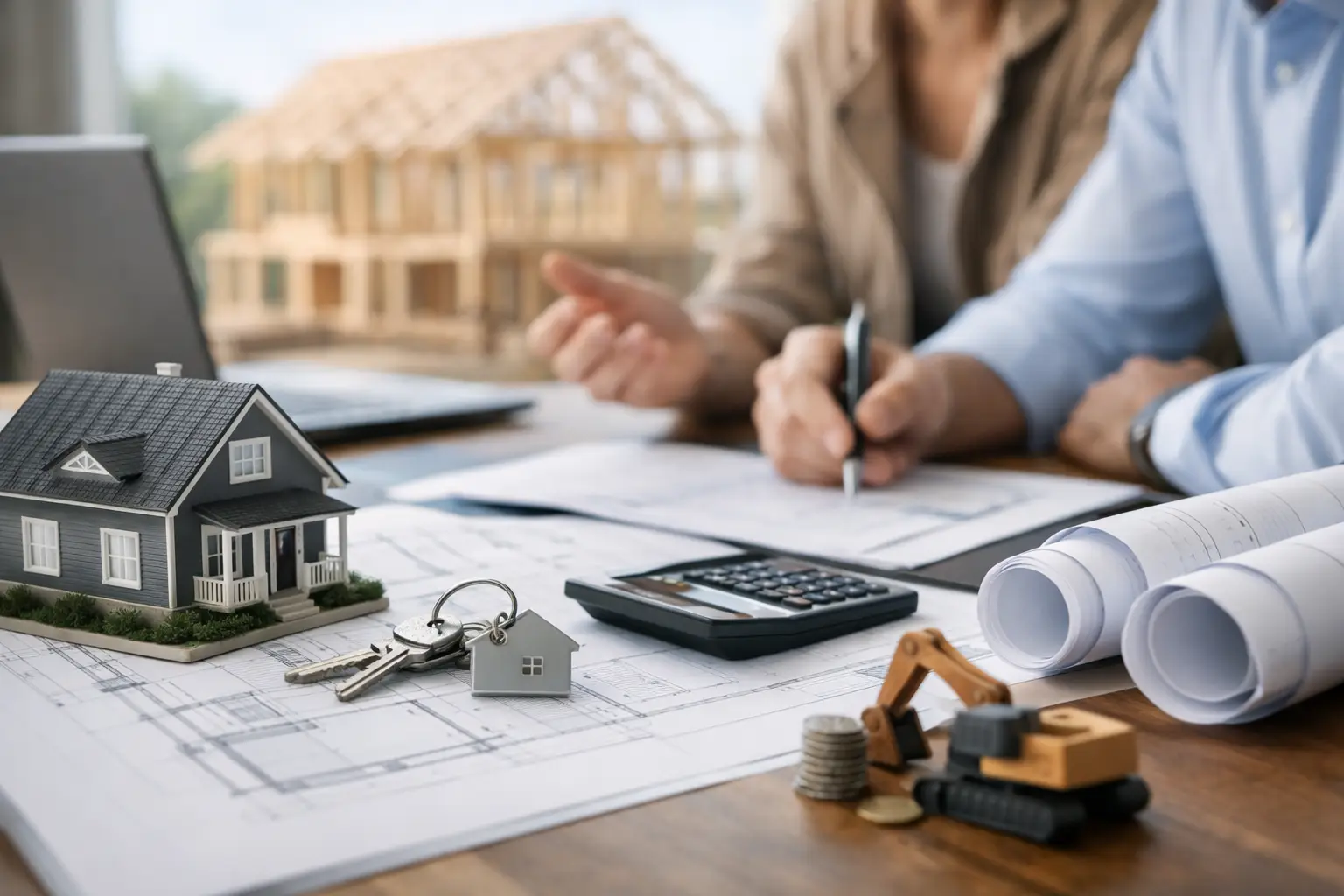
If you are planning to build your primary residence in California, the financing structure matters almost as much as the plans, budget, and builder. The best owner occupied construction financing is not just the loan with the lowest advertised rate. It is the loan that fits your land position, your equity, your timeline, your documentation, and the way lenders will actually underwrite the completed home.
That distinction matters because many borrowers start with a bank that handles standard mortgages well but struggles with residential construction. The result is often a lower loan amount than expected, unnecessary closings, rigid draw terms, or a decline based on factors that a true construction lender would have addressed early. If you want a realistic path to building, you need to know what “best” really means in this market.
What the best owner occupied construction financing really looks like
For an owner-occupied project, the strongest financing usually gives you enough leverage to complete the build without forcing you into expensive outside cash solutions. It should also match how your project will unfold from lot ownership through final occupancy.
In practical terms, the best structure often comes down to three things. First, how the lender calculates value. Second, whether you need a construction-only loan or a one-time close construction-to-permanent loan. Third, how flexible the lender is on borrower profile, builder type, and project complexity.
A loan can look attractive on paper and still be the wrong fit. For example, a lender may offer a competitive rate but base proceeds too conservatively, creating a cash gap halfway through construction. Another may approve the loan amount you need but require two closings, adding cost and uncertainty. The right financing balances proceeds, process, and long-term payment strategy.
Best owner occupied construction financing options in California
California borrowers usually land in one of a few core categories, and each one serves a different purpose.
One-time close construction-to-permanent loans
For many primary residence borrowers, this is the most efficient option. You close once, fund the construction phase, and then the loan converts to the permanent mortgage when the home is complete. That means fewer closing costs than doing a separate construction loan and refinance later. It also reduces the risk of having to re-qualify after the build.
This structure is especially useful when rates, income documentation, or market conditions could shift during construction. You are solving the financing upfront rather than hoping the takeout mortgage is available later.
The trade-off is that these loans can require more upfront precision. Plans, specs, budget, builder approval, and appraisal all need to be strong before closing. If your project is still fluid, a construction-only structure may offer more room.
Construction-only loans
These are short-term loans designed to fund the build phase, with the expectation that the borrower will pay off the loan through a sale or refinance after completion. This can make sense if you want flexibility, expect your financial profile to improve, or are building in a way that does not fit permanent financing at the start.
The downside is obvious. You are taking on a second financing event later. If market conditions change or the completed home appraises differently than expected, that second step can become more expensive or more difficult.
Owner-builder financing
This is one of the hardest categories for general banks and one of the most misunderstood by borrowers. If you want to act as your own builder, lender options narrow quickly. The strongest programs usually require significant experience, a detailed cost breakdown, and a high level of project readiness.
When it works, owner-builder financing gives you more control over the project and can improve cost efficiency. But it is not automatically the best fit just because you want to manage the build yourself. Lenders see more execution risk here, so the structure has to be defensible.
Major remodel and tear-down financing
Not every owner-occupied construction project starts with vacant land. Many California borrowers already own the home and need financing for a large addition, major remodel, or full tear-down and rebuild. These projects need construction-specific underwriting, not a simple home improvement loan.
The best financing in this category depends on how much existing equity you have, whether the property will remain habitable during construction, and how the finished value supports the loan request. This is where finished-value-based underwriting can make a major difference.
Why finished value matters so much
One of the biggest mistakes borrowers make is assuming the lender will focus mainly on current land or property value. In construction lending, the key metric is often the as-completed appraised value. That is what can allow a borrower to finance more of the total project cost, especially when the home being built will be worth substantially more than the current site value.
This is one reason specialized construction financing can outperform standard bank options. A lender that understands finished-value underwriting can often structure a higher-leverage solution than a bank focused too narrowly on current collateral value or generic mortgage guidelines.
It does not mean every project qualifies for high leverage. Appraisal support still matters. So do your plans, local market comparables, construction budget, and contingency. But if your project is strong, finished value can be the difference between a workable loan and a stalled project.
How to judge the best owner occupied construction financing for your project
Start with the question borrowers often avoid: how much cash do you actually want to bring in, and at what stage? Some clients are comfortable putting more equity into the deal to improve terms. Others need maximum leverage because they want to preserve liquidity for reserves, upgrades, or carrying costs. Neither approach is wrong, but it changes the best financing choice.
Next, look at the site itself. If you already own the lot, that equity may count toward the project. If you still need to buy the land, the loan may need to cover both acquisition and construction. Land-plus-construction deals are common, but they must be structured correctly from the beginning.
Then consider documentation. W-2 income is straightforward, but many California borrowers are self-employed, commission-based, or have more complex tax returns. The best loan is the one you can actually qualify for without creating avoidable delays. A good construction lender looks at the full picture, not just the easiest version of the file.
Finally, think about the end game. Are you building a long-term primary residence and want payment stability? A one-time close option may be the best fit. Are you still deciding on your permanent financing strategy or expecting a major income event later? Construction-only may be worth considering.
Common reasons borrowers choose the wrong loan
The first problem is shopping by rate alone. Construction lending is a structure-driven transaction. A lower rate does not help if the loan amount comes up short, the draw process is too restrictive, or the lender cannot close on the project as proposed.
The second is applying too early with incomplete plans. You do not need every finish selected on day one, but lenders need enough detail to underwrite cost, value, and feasibility. Weak project packaging leads to delays and lower confidence.
The third is using a lender with limited construction depth. Residential construction loans are not just mortgages with a different label. They involve staged disbursements, builder review, project administration, contingency analysis, and completion risk. Experience matters.
What strong borrowers do before applying
They tighten the project scope. They understand the total budget, including soft costs, permits, site work, interest reserve, and contingency. They know whether they want to use an approved builder or pursue owner-builder financing. And they ask early whether the loan will be based on cost, completed value, or a blend of both.
They also get realistic about timing. Construction financing takes coordination between borrower, lender, builder, appraiser, and in some cases the county. Speed improves when the file is organized from the start.
This is where a specialist can make a measurable difference. California Construction Loans works with borrowers who need residential construction financing structured around actual project conditions, not generic bank assumptions. That matters when leverage, appraisal strategy, and loan type all need to line up.
If you are comparing options, the best move is not chasing the broadest promise. It is getting clear on which loan structure gives your project the best chance to close, fund smoothly, and convert into a home you can keep for the long term. The right construction financing does more than approve a file - it gives your project room to succeed.


